
It’s an exciting time to be in, or managing, a Marketing Operations (MO) role. The idea of combining process, metrics and technology into a Marketing practice was introduced in 2004, in the book, The New Marketing Mission: How Process, Metrics and Technology Can Unleash Growth. Years later, fueled by the growth of Marketing technology, greater competition, and increased pressure from the C-Suite to improve and prove the value of Marketing, more Marketing organizations are implementing MO as a standalone role.
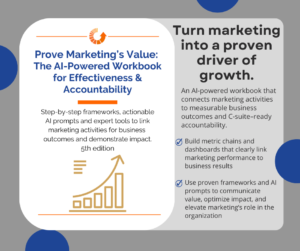
Buy Your Best-Practices Workbook
Like any other discipline, Marketing Operations is constantly evolving. We define MO 2.0 as the initiative that Best-in-Class (BIC) Marketing organizations are implementing to transform Marketing into a Center of Excellence (COE). They are doing this by expanding the MO role and skill set to enable Marketing and organization-wide agility, including:
- Performance targeting, monitoring, and measuring skills; and process and technology optimization
- Strategic and leadership capabilities to drive change
- Fostering, institutionalizing, and modeling best practices and performance management skills
Why is achieving agility an essential outcome of a successful COE initiative? A Massachusetts Institute of Technology study found that agile firms grow revenue 37% faster and generate 30% higher profits than non-agile companies. Agile Marketing organizations are better able to adapt their marketing efforts, quickly and successfully, in response to changing customer behavior, market conditions, and business direction to improve market share and/or customer value.
Marketing Operations facilitates the processes that support agility. As such, Marketing Ops is your gateway to excellence.

Focus Your Marketing Operations in these 6 Areas
The marketing process has been a core capability for VisionEdge Marketing since 1999. When we began our Marketing Performance Management (MPM) research in 2001, Marketing Ops and processes were a key area of study. As a result, we’ve been able to capture whether there are differencesin the Marketing Ops function of the Best-in-Class. We’ve learned that within BIC marketing organizations, MO focuses on these six key areas to transform marketing into a COE:
- Alignment: We know with statistical significance that BIC marketers take a different approach to aligning marketing with the business. They connect marketing activities and investments to business results, and take their alignment efforts beyond the sales function.
- MO facilitates the alignment process and oversees the development of a customer-centric marketing plan that ensures that the marketing investment portfolio supports measurable marketing objectives that will have a direct impact on the business.
- Accountability: BIC marketers have a framework for establishing the metrics to measure and report on marketing’s value, impact, and contribution. They know which outcomes and metrics matter to the leadership team.
- MO drives the development of the framework and key performance indicators (KPIs). They manage the mechanics of measurement, perform the analysis, and publish the performance results. MO translates marketing metrics into an actionable marketing dashboard that the leadership and the marketing teams can use to make strategic, tactical, and investment decisions.
- Analytics: In today’s fact-based environment, data and analytics are table stakes. Marketing organizations need to be able to quickly synthesize data and gain actionable insights. Marketers need the analytical muscle to build and use models to make smart investments and strategic decisions.
- MO constructs and maintains an environment that enables marketing to better use data and analytics.
- Automation: From marketing resource management to business intelligence to data management systems to reporting platforms to scenario analysis tools the technology available to help marketing measure and report on performance is extensive and growing.
- MO selects, deploys, and manages the automation and technology infrastructure to support the department. The deployment of a technology infrastructure, training, and change management falls under the auspices of MO and serves as the big “I”— the infrastructure that marketing needs to guide decisions, improve its capabilities, and prove its value.
- Alliances: Much has been written about the need for Marketing to form strong, more explicit alliances with Sales, IT, and Finance, as well as with the service and product functions.
- MO acts as the conduit between Marketing, Sales, Finance, and the executive team. It forms and manages these alliances so that everyone on the team is “rowing in the same direction.” As part of its work, MO should craft the operating level agreement that serves as the “rules and roles of engagement” for each of these partnerships and ensure that the liaisons from each group are included in appropriate meetings and decisions.
- Assessment: Continuous improvement is at the heart of assessment and benchmarking. It can only be achieved within a culture where there is genuine concern, dedication, and a willingness among management and employees to improve.
- MO conducts the benchmarking and assessments to determine what standards are needed to achieve the direction and vision set for the team by the marketing executive.
Learn more about how to transform your Marketing into a center of excellence by following this link, or Contact Us to talk about how we can help.
FAQ:
A: Because the growth of marketing technology, increased competition, and rising C-suite expectations to prove and improve Marketing’s value have made process discipline, measurement, and enabling technology essential—not optional.
A: The concept was introduced in 2004 in The New Marketing Mission: How Process, Metrics and Technology Can Unleash Growth, which helped formalize the idea of operationalizing Marketing through disciplined process, performance measurement, and technology enablement.
A: MO 2.0 is the initiative Best-in-Class (BIC) Marketing organizations are implementing to transform Marketing into a Center of Excellence (COE) by expanding the MO role to enable agility across Marketing—and often across the enterprise.
A: MO 2.0 expands the role and skill set to include:
- Performance targeting, monitoring, and measurement, plus process and technology optimization
- Strategic and leadership capabilities to drive change
- Fostering, institutionalizing, and modeling best practices and performance management skills
A: Because agility improves growth and profitability. An MIT study found agile firms grow revenue 37% faster and generate 30% higher profits than non-agile companies. Agile Marketing organizations adapt quickly to changes in customer behavior, market conditions, and business direction—improving market share and customer value.
A: Marketing Operations facilitates the processes, metrics, and technology infrastructure that make agility operational—so Marketing can adjust priorities, reallocate resources, optimize workflows, and measure performance quickly and consistently.
Focus Your Marketing Operations in These 6 Areas
A: Best-in-Class MO focuses on six areas to transform Marketing into a COE:
- Alignment
- Accountability
- Analytics
- Automation
- Alliances
- Assessment
A: MO facilitates alignment by connecting Marketing activities and investments to business results—beyond just Sales alignment—and overseeing the development of a customer-centric Marketing plan. The goal is to ensure the Marketing investment portfolio supports measurable objectives that directly impact the business.
A: MO drives the KPI framework and measurement mechanics, performs analysis, publishes performance results, and translates metrics into an actionable Marketing dashboard that leaders and teams use to make strategic, tactical, and investment decisions.
A: MO constructs and maintains the environment that enables Marketing to synthesize data quickly, generate actionable insights, and build/use models to guide smarter investments and strategic decisions.
Recent Posts
- Focus on Solving Customer Pain Points to Future-Proof Your Company | What’s Your Edge?
- The Destiny of Siloed Priorities is Random Acts
- The Power of Customer-Led Product Development for Market Growth | What’s Your Edge?
- Footprint Expansion: A Customer-Centric Growth Strategy for Scaling
- The Focus on Right-Fit Customers Yields Faster Profitable Growth | What’s Your Edge


You must be logged in to post a comment.