
We all know customer retention is more cost-effective than the investment associated with new customer acquisition. Why do your customers leave, and what can you do about it? There are many reasons a customer or client may leave you. There are four common ones, and three of these you can impact.
Common Reasons Customers Leave
High satisfaction scores won’t keep customers from leaving. There are four common reasons customers defect.
- They felt your pricing was too high or unfair.
- They had an unresolved complaint.
- They took a competitors offer.
- They left because they felt you didn’t care.
Often, the Sales and the management teams focus on the first one – price. It is the last two, however, that make up the majority of reasons why a client or customer no longer uses your service or buys your products. Three of these are something every company can address.
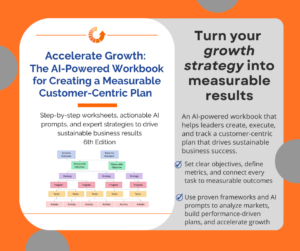
Buy Your Best-Practices Workbook
Focusing on Customer Retention is Good for Business
 There are just as many reasons to fix these. Most importantly is because companies that fail to nurture and retain their customer base ultimately fail. Research finds that these companies spend twice as much to acquire new business. They struggle to attract new clients because they don’t have good references.
Before you spend your time and money going after new customers and clients you do not currently have a relationship with consider these accepted statistics:
- Repeat customers spend 33% more than new customers.
- Referrals among repeat customers are 107% greater than non-customers.
- It costs six times more to sell something to a prospect than to sell that same thing to a customer.
You can make your marketing dollars go further if you use some of your money to build, nurture, and develop your customer relationships. Any size business can invest in customer relationship management and customer loyalty.
Develop and Deploy a Customer Retention Initiative
 Customer-centric companies take a proactive stance on customer loyalty. Here’s one thing you can do right now. Establish at least one business outcome tied to customer retention. Have at least one Marketing objective tied to this outcome.
Five key components you will need to support your customer retention initiative.
- People. Have at least one person dedicated to the initiative and at least one senior management sponsor.
- Focus. Create at least a one page document that explains the outcomes of the initiative, how it will work, and how success will be measured. Define the program components. Keep the program easy to understand and execute.
- Engage employees. Communicate the initiative to every employee of the company. Employees must feel a responsibility to execute the program as it was designed in order for it to be successful. Include customer loyalty program goals as part of performance reviews to encourage employee participation.The program must be simple for employees to explain and execute. Be sure they are empowered to address moments of truth.
- Retention takes more than rewards. Customer retention is more than a rewards or frequent buyer program. If you’re going to offer awards for additional purchases, make sure they are good enough to generate excitement or involvement. Offer awards that are realistic and affordable for your company.
- Be of Value. Understand your customers’ preferences and habits. What makes them leave? What makes them stay? How do you continue to provide value? Ask customers to complete a short information form that provides insights into their preferences, pain points, and needs. Design your program to address these. Create and send communications that relate to and resonate with your customers. Your communication should offer them a way to learn something new or of value every time they receive something from you.
Develop customer-centric measures to support finding, keeping, and growing the value of customers. Leverage our experience to develop your initiative.
FAQ:
A: Retaining customers is significantly less expensive than acquiring new ones. Research shows repeat customers spend 33% more, are 107% more likely to refer others, and it costs six times more to sell to a prospect than to an existing customer. Companies that neglect retention struggle with higher acquisition costs and diminished references.
A: There are four primary reasons:
- They feel your pricing is too high or unfair.
- They have unresolved complaints.
- They accept a competitor’s offer.
- They perceive that you don’t care.
While price often receives the most attention, most defections stem from the last two—both of which are within your control.
A: Customer-centric companies that nurture and retain their base outperform those who don’t. Retention initiatives not only reduce costs but also drive higher spend and more referrals. Investing in customer relationships amplifies your marketing ROI and strengthens your competitive position.
A: Start by tying at least one business outcome and one Marketing objective to retention. Build your initiative on these five components:
- People: Assign ownership and secure senior management sponsorship.
- Focus: Document outcomes, processes, and success metrics in a concise, clear format.
- Employee Engagement: Communicate the initiative company-wide, integrate goals into performance reviews, and empower employees to act at critical moments.
- Beyond Rewards: Make loyalty programs meaningful—focus on real value, not just incentives.
- Be of Value: Understand customer preferences and pain points. Use data to personalize communications and consistently deliver value with every touchpoint.
A: Develop customer-centric metrics that track your ability to find, keep, and grow valuable customer relationships. Regularly review these metrics and adjust your strategies to maximize retention impact.
A: VisionEdge Marketing offers proven expertise in designing and executing customer retention programs. Leverage our experience to create initiatives that drive loyalty, growth, and measurable business results.
Recent Posts
- Focus on Solving Customer Pain Points to Future-Proof Your Company | What’s Your Edge?
- Customer-Centricity in M&A: The Accelerant for Post-Deal Value
- How Strategic Clarity Drives Growth, Profitability, and Customer Value
- Breaking Through Stagnant Growth with a Customer-Centric, Process-Driven Approach | WYE?
- Why Lack of Accountability is Stalling Your Organization’s Growth


You must be logged in to post a comment.