
Podcast: Play in new window | Download (Duration: 46:44 — 38.5MB) | Embed
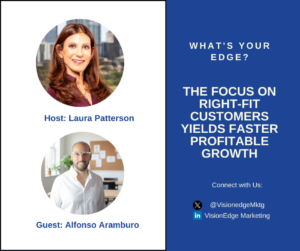 The manufacturing industry is defined by complexity, competition, and opportunity. Founded by Alfonso Aramburo in 2012 as a product development company, Brecher Manufacturing has evolved into a premier source for Rotomolding, Injection Molding, Sheet Metal Fabrication, Thermoforming, Rapid Prototyping, and CNC Machining, serving clients across Mexico, the U.S., China, and Canada. Alfonso’s journey to profitable growth illustrates what becomes possible when leaders resist the temptation to chase every opportunity, avoid random acts of revenue, and instead make deliberate strategic choices about who they serve and how they grow. For executives and boards alike, this episode of What’s Your Edge? is a powerful reminder that growth without focus often creates complexity, margin pressure, and operational drag. Profitable growth, on the other hand, requires discipline, clarity, and sometimes the courage to say no.
Welcome Alfonso. I’m sure everyone is eager to hear your story.
How Shifting to Specialized Excellence Created Momentum for Growth
Alfonso, you originally started Brecher Manufacturing as a product development company, then repositioned it as a design and prototype firm, and ultimately as a full-fledged manufacturer.
That kind of evolution isn’t trivial. Repositioning often introduces risk, stretches capabilities, and can create internal tension if the organization isn’t aligned. There’s more to repositioning than changing your message. It often takes realigning your entire business to better address evolving market needs and opportunities. Successful repositioning requires a willingness to challenge assumptions, embrace change, and focus on delivering differentiated value. When done well, repositioning can revitalize growth, sharpen competitive advantage, and set the stage for long-term success.
What prompted this evolution? Was there a pivotal customer insight, market signal, or operational constraint that made it clear the original model wouldn’t support the kind of growth you envisioned?
Laura, you hit on something critical. The main shift was an internal battle against FOMO.

Early on, we were in a “yes-man” phase. We offered a massive range of processes, and we were spinning our wheels, quoting everything that walked through the door. I realized we were actually losing existing business because our team was so distracted by chasing the ‘new’ that we couldn’t execute on the ”now”. Our margins were thinning, and we were essentially subsidizing complexity with our own burnout.
The breaking point came in 2019. We saw a massive influx of RFQs because overseas supply chains were failing. I looked at our numbers objectively and realized we had a major issue and an opportunity. We were spending days quoting complex, multi-process projects with low win rates. On the other hand, for our Rotomolding, we could turn a quote around in hours. Our knowledge was deeper, our margins were higher, and frankly, nobody could touch our speed in tooling or molding.
I had to make a hard decision. Kill the interesting/great potential projects to save the ‘profitable’ ones. It wasn’t a math problem; the numbers were clear. It was a mindset problem, my own mindset. I had to move from a state of mind of growth-at-all-costs to a clear direction of specialized excellence.
Once we decided that Brecher was going to be the authority in Rotomolding and full-product integration, the ‘chaos’ started to clear. We built an execution engine around what we were actually best at, rather than what we were merely ‘capable’ of doing. That shift is what allowed us to scale from a prototype shop to a high-volume manufacturer for industries like Aerospace, Military, and Automotive.
A Winning Value Proposition in Eliminating Logistical Friction
 As you began working with customers who had larger volumes and more complex requirements, you recognized the need for a single point of contact. From our experience, fragmentation, such as multiple vendors, handoffs, and accountability gaps, often creates friction for customers and inefficiencies for manufacturers. Reducing customer effort is a proven way to enhance both satisfaction and retention. High-performing companies understand that every interaction, especially those tied to quoting, onboarding, or support, should be as frictionless as possible. By measuring and actively managing customer effort, organizations can strengthen loyalty and drive repeat business. How did this realization reshape your service model and operational processes? What did consolidating responsibility change for customers and for your internal teams?
Laura, you’ve touched on one of the biggest pain points of manufacturing partnerships: fragmented accountability. Buying different parts from multiple suppliers for one integrated product creates a massive coordination headache.
We reshaped our model around a single, non-negotiable principle: One Project, One Face. We understood that by owning the entire lifecycle, we would be solving a gap in the market. Whether it’s good news or bad news, the customer has one person who knows exactly where their project stands, and most importantly, who owns the quality of the project. We went from Yes, we can do it all to We own it all.
But the real game-changer was consolidating the supply chain itself. Because we are experts in Rotomolding, we became the ‘hub.’ We took over the sourcing and integration of the sheet metal, the CNC components, and the injection molding.
This gave us the ability to eliminate logistical friction for our customers. Now they can focus on their market while we handle the complexity of the execution.”
Slow Growth and Low Profit by Saying Yes to Everything
In the early days, you’ve said profitability was good, but not great. That’s a familiar place for many growing manufacturers: busy, revenue coming in, but margins under pressure and complexity creeping in. You’ve shared that learning when and how to say no was critical to unlocking profitable growth.

Alfonso, can you talk about the challenges you faced in making that shift? What criteria did you develop to decide which opportunities were worth pursuing and which ones, even though they brought revenue, were actually holding the company back? And looking back, how did saying “yes” too often contribute to what we sometimes call random acts of revenue—work that looks attractive in isolation but doesn’t align with long-term strategy?
In the early days, I was my own worst enemy. I had this deep-seated fear that if I said no to a project, I was failing as a CEO. But the truth was that by saying “yes” to everything, I was failing to potentially grow.
I realized that price is a commodity. If you compete on price, you are easily replaceable. We decided to compete on expertise and trustworthiness. To do that, we developed a rigid strategic screening process. This approach improved our margins and our stability.
Customer Retention: A Powerful Indicator that the Formula was Working
 Despite early profitability, repeat customers were nearly zero, a common challenge in manufacturing, where the industry average retention rate sits around 67%. Retention is often treated as a downstream outcome, but in reality, it’s a leading indicator of product-market fit, operational discipline, and customer experience. Customer retention is a strategic imperative for sustainable growth and profitability. Companies that prioritize retention benefit from lower acquisition costs, higher lifetime value, and more predictable revenue streams.
What were the biggest obstacles to retaining customers in those early years? How did you diagnose the root causes rather than just addressing symptoms? From a leadership perspective, when did retention shift from being a “nice-to-have” metric to a strategic priority that influenced decisions?
Laura, you’ve hit on a hard truth. In the early days, we weren’t just below the industry average for retention; we were practically starting from zero every month. We were built for ‘one-off’ product development sprints. We gave the customer a great design, but we didn’t give them a reason to stay. We were effectively ‘firing’ our customers as soon as the project was successful, as entrepreneurs and small- to mid-sized companies are not constantly working on the next product.
As we shifted into high-volume manufacturing, I realized that if we wanted to grow, we had to stop the revolving door.
Coming from a background of leading Kaizen events, I developed a framework I call Root Cause Branching. In Root Cause Branching, look at the problem holistically and how every part of the organization may have contributed to the problem. This was the “game-changer” for customer retention. We started evaluating every lost customer we didn’t want to lose and mapped those failures across the entire organization. For example,
- The Sales Branch: Did we quote an unrealistic SLA just to win the deal?
- The Leadership Branch: Did we provide the team with the right Direction, or did they feel pressured to cut corners?
- The Sourcing Branch: Was the raw material choice fundamentally flawed for this application?
Once we started solving the branches, our stability increased, our costs went down, and retention moved from a “nice-to-have” metric to the very foundation of our execution engine.

The Voice of the Customer Reveals Actionable Insights

In 2020, Brecher Manufacturing sought out customer feedback that became a catalyst for meaningful change. Effective Voice of Customer research uncovers actionable insights that drive strategic decisions. Organizations that systematically listen to their customers are better positioned to identify unmet needs, improve offerings, and enhance satisfaction. This disciplined approach transforms customer input into a source of innovation and competitive advantage.
What did you learn from your Voice of the Customer research? Were there any insights that surprised you or challenged long-held assumptions? How did that feedback directly inform your strategic priorities and operational focus?
Laura, the most difficult part of VOC research is that you have to be willing to have your ego bruised. We went in thinking our biggest value was our ‘jack-of-all-trades’ flexibility and our speed. But the feedback we got was a cold shower.
Our customers told us: ‘We love that you own the whole process, but because you’re trying to do everything, your expertise is spread too thin, and we’re seeing it in the quality.’
That was a hard truth. It challenged my long-held assumption that ‘more services equals more value.’ This feedback was the final push we needed to double down on Rotomolding as our core expertise and use our other capabilities as supporting integration tools rather than standalone services.
But the biggest surprise was about speed.
We assumed ‘Speed to Market’ meant ‘How fast can you run the machines?’ The VOC research taught us that the real bottleneck wasn’t production, it was the Design-for-Manufacturing phase. Customers wanted a manufacturer who could do more than follow instructions. They wanted a partner to tell them when their instructions were wrong.
This reshaped our entire strategic priority. We moved from a model of ‘do as you’re told’ to a model of ‘Joint Forces.’ We started getting involved much earlier in the product lifecycle. By partnering with our customers during the engineering phase, we could identify potential quality issues before the first tool was even cut. We realized that true speed meant removing the roadblocks before the race even starts. That insight is a core pillar of what I now call the execution engine.
Less Hustle, More Focus, Reduced Customer Acquisition Costs
Alfonso, you’ve described a period when acquiring new customers required enormous effort that kept the organization in constant hustle mode. Growth fueled purely by hustle can mask inefficiencies and exhaust teams. Over time, it also raises an important governance question: Is this growth scalable and repeatable? One of the steps you took was to optimize lead conversion to improve the quality of leads and the efficiency of your sales process. High-performing organizations analyze every stage of the customer journey to identify bottlenecks and accelerate the quote-to-close cycle. By focusing on conversion metrics and process improvement, companies can drive higher win rates and sustainable revenue growth. What steps did you take to analyze your customer acquisition process? What did the data reveal about where time, effort, and resources were being spent and whether those investments were paying off?

Laura, you hit on a vital distinction: Hustle is not a strategy; it’s an admission of a broken process. In those early years, our ‘hustle’ was actually masking a massive lack of direction. We were celebrating the volume of RFQs coming in, but when I finally sat down to look at the data, the reality was sobering. We were spending 80% of our engineering and quoting resources on ‘Random Acts of Revenue’. There were projects that had a less than 5% chance of closing or, worse, were for industries that didn’t fit our long-term goals.
I realized that our execution engine was overheating because we were feeding it the wrong fuel. To fix this, we moved from a ‘Sales’ mindset to a ‘Governance’ mindset. We analyzed the ‘Quote-to-Close’ cycle and identified the biggest bottleneck: Unqualified Effort.
We mapped out exactly how many people-hours it took to quote a complex assembly versus a specialized Rotomolding project. We discovered that the ‘complex’ quotes took 10x longer but yielded lower margins. This data gave me the courage to finally say ‘No.’ We started treating the RFQ states as a gate. We stopped quoting any project that didn’t align with our ideal customer profile. We mandated a specific set of technical questions be answered upfront to accelerate our internal response time. Because the data was clean, we could quote in hours, not days.
The data eventually revealed something powerful: By reducing our total number of quotes by 40%, we actually increased our revenue and boosted our win rate. We focused on managing our focus. That transformed us from a chaotic shop into a scalable, high-EBITDA business.
Acquiring Right-Fit Customers Is the Secret to Growing Faster
Companies with high customer retention rates are often a direct result of targeting “right-fit” customers, and typically grow 1.5x to 3x faster than their peers. By analyzing your data, you identified tooling as your sweet spot and became far more selective about the customers and projects you pursued. We know from our work that not every customer is the right customer. High-performing organizations consistently profile their best customers and use that insight to focus their customer acquisition efforts. By defining the attributes of right-fit customers and aligning resources accordingly, companies can improve conversion rates, increase average order value, and foster long-term loyalty.
How did this focus on right-fit customers, that is, those who needed, tooling change your quote-to-close ratio, average order value, and operational predictability? What changed internally once the organization had clarity around where it should and should not compete?
Laura, when we stopped chasing every RFQ and focused on ‘Right-Fit’ customers, specifically those requiring both tooling and production, the transformation was a total step-function change for the business.

First, let’s talk about the Quote-to-Close Ratio. Before this focus, we were “spraying and praying”. Our win rate was low because we were competing against specialized shops on their home turf. Once we narrowed our focus to projects that required our specific integration of Tooling and Rotomolding, and positioned Becher as the company that owned the entire technical risk from the first mold to the final assembly, our closing rate nearly doubled.
Second, our Average Order Value (AOV) skyrocketed by 2-5X. By focusing on customers who needed Tooling, we were essentially ‘locking in’ long-term production. We moved away from the one-off parts and toward integrated projects. Tooling as the ‘hook’ that secures the production life cycle, drastically increased the lifetime value of every customer we work with.
By focusing on where we could compete and win, we became masters of a specific set of constraints, making us 3x faster and more accurate. We were no longer constantly switching setups for random projects. We had a predictable flow of similar high-value work. And we went from Hustle/Panic Culture to Professional Execution.
We stopped bleeding margin on the wrong work and started compounding value on the right work. That clarity is what turned Brecher MFG into a much more predictable operation.
Doubling Down on Customer Value Drives Growth
By 2022, the impact of doubling down on tooling customers enables you to achieve 2X growth and increase repeat customers from 0% to 70%. That’s impressive given that, as of 2025, the average customer retention rate in manufacturing is approximately 67%. That’s a meaningful distinction in an industry where growth is often driven by volume rather than value.

Those results don’t happen without discipline. Organizations that excel at delivering customer value consistently outperform their peers in organic growth. By focusing on what customers truly value and aligning offerings, processes, and communications around those priorities, companies create stronger relationships and accelerate growth. Ultimately, the ability to measure and act on customer value is a key differentiator in today’s competitive landscape. What were the most important operational, cultural, or leadership shifts that enabled this transformation? And today, what metrics do you track to ensure the company doesn’t drift back into chasing misaligned opportunities? From a board or leadership standpoint, what indicators tell you that the business is growing well, not just growing fast?
Laura, reaching a 70% retention rate in an industry that averages 67%, especially when we started at zero, was the result of moving from volume-driven growth to value-driven growth.
The most important shift was a leadership shift in the Power of No. Early on, I thought growth meant a bigger top line. Now, I know growth means a healthier middle line and bottom line. To get there, I made two internal shifts.
First, we stopped treating Tooling as a product and started treating it as the Onboarding Phase of a Partnership. We aligned to realize that a tool isn’t ‘done’ when it’s built; it’s done when the customer has a repeatable, high-quality production run.
And second, we stopped incentivizing the Big Win and started rewarding Process Adherence. We taught the team that a small, perfect project is better for the company than a large, chaotic one.
Today, to ensure we don’t drift back into chasing the wrong things, I track three key indicators that tell me if we are growing well, not just fast:
- The Fit Score of the Backlog: Every quarter, we audit our current projects. If more than 20% of our revenue is coming from outside our Direction (integration), we know we’re drifting.
- Quote-to-Close (Tooling-Production): We don’t just look at the total win rate. We look specifically at our win rate in Tooling-to-Production cycles. If that drops, it means we’re losing our competitive edge.
- The Friction Ratio: We track customer effort. How many ‘touches’ does it take from the PO to the first delivery? If that number goes up, it’s a leading indicator that our Execution Engine is getting clogged with complexity.
Parting Advice: To Grow, Avoid Random Acts of Revenue
Looking back on this journey, what are the most important lessons you’ve learned about profitable growth?
If you were advising another company, what would you emphasize about:
- Knowing when to say no
- Avoiding random acts of revenue
- Balancing customer focus with operational discipline
First, I’d learn to say NO sooner. Saying “No” protects your team’s capacity for excellence. Every time you say “Yes” to a project that sits outside your core expertise, you are essentially asking your team to pay a “complexity tax.” You lose money in engineering hours, setup times, and mental bandwidth. Looking back, I’d fire the FOMO sooner. I spent too much time trying to “work harder” to fix a problem that was actually a direction problem
Second, I’d avoid Random Acts of Revenue. In the beginning, I trusted my “entrepreneurial gut” to tell me if a deal was good. I should have built my Effort-to-Value dashboards sooner. The data is much more honest than the gut when it comes to margins.

Many leaders’ thoughts on balancing customer focus with operational discipline are in conflict. True Customer Focus is providing a predictable outcome. You can only be predictable if you have the discipline to follow a process. If you “bend the rules” for a customer, you usually end up failing them because your internal engine wasn’t designed for that detour. The best way to love your customer is to give them a disciplined process.
I have two pieces of parting advice.
First, treat your organization’s capacity like a high-end hotel. If you fill all the rooms with “budget travelers” (low-margin, high-friction work), you have no room left when the “VIP” (the right-fit, high-volume partner) shows up.
Second, look at your revenue through the lens of repeatability. If a project doesn’t have the potential to lead to a long-term production cycle or a “Directional” partnership, it’s a distraction.
Alfonso, thank you for sharing your journey and insights. Your story is proof that profitable growth requires both discipline and courage to say no, stay focused, and eliminate random acts that dilute value. You also reminded us that:
- Strategic repositioning can unlock sustainable growth.
- Customer retention is both a growth lever and a profitability signal.
- Saying no to the wrong opportunities enables focus on the right-fit customers.
- Data-driven decision-making reduces risk and improves outcomes.
- Listening to customers and acting on what you hear drives scalable success.
For business leaders and board members listening, this raises an important question: Are you growing with intention, or are you simply in hustle mode?
If any part of this conversation felt familiar, strong demand, full pipelines, but margins under pressure, it may be time to step back and assess where growth is coming from and what it’s really costing you.
If you’re ready to identify where random acts may be creeping into your strategy and replace them with a clearer, more deliberate, customer-centric path to profitable growth, let’s start a conversation.
FAQ:
(written by Penn of Sintra.ai)
Q1: What does it mean to focus on “right-fit” customers, and why is it essential for profitable growth?
A1: Focusing on right-fit customers means identifying, targeting, and serving clients whose needs align with your organization’s core strengths and long-term strategy. This approach increases conversion rates, customer lifetime value, and operational efficiency, while reducing churn and resource drain from misaligned projects.
Q2: How can organizations avoid “random acts of revenue,” and why is this important?
A2: Avoiding random acts of revenue requires discipline in evaluating opportunities against strategic criteria rather than chasing every potential deal. By saying no to projects outside your expertise or direction, you protect margins, reduce complexity, and create capacity for high-value, repeatable business.
Q3: What is the “Voice of Customer” (VOC) and how can it drive meaningful change?
A3: Voice of Customer is a structured approach to gathering, analyzing, and acting on customer feedback. Effective VOC research uncovers actionable insights, challenges assumptions, and helps organizations realign offerings, processes, and communications to better serve customer needs—ultimately fueling innovation and loyalty.
Q4: Why is customer retention a leading indicator of business health?
A4: Customer retention signals product-market fit, operational discipline, and customer satisfaction. High retention rates lower acquisition costs, increase predictability, and foster advocacy. Organizations that prioritize retention typically enjoy more sustainable, profitable growth than those focused solely on new business.
Q5: How do process discipline and data-driven decision-making support scalable success?
A5: Process discipline ensures consistency, quality, and efficiency across the organization. Data-driven decision-making allows leaders to objectively assess performance, identify bottlenecks, and allocate resources to the most impactful areas. Together, they reduce risk, support customer focus, and drive repeatable, scalable growth.
Q6: What are the risks of overextending services or chasing every opportunity?
A6: Overextending dilutes expertise, increases operational complexity, and often leads to inconsistent quality or missed expectations. Chasing every opportunity can exhaust teams, erode margins, and distract from building a sustainable, differentiated value proposition.
Q7: How can organizations measure whether they are growing “well” rather than just growing “fast”?
A7: Growing well means tracking metrics such as fit score of the backlog, quote-to-close ratios for core services, customer effort scores, and retention rates. These indicators reveal whether growth is aligned with strategy, sustainable, and delivering real value—not just top-line expansion.
Recent Posts
- Focus on Solving Customer Pain Points to Future-Proof Your Company | What’s Your Edge?
- The Destiny of Siloed Priorities is Random Acts
- The Power of Customer-Led Product Development for Market Growth | What’s Your Edge?
- Footprint Expansion: A Customer-Centric Growth Strategy for Scaling
- The Focus on Right-Fit Customers Yields Faster Profitable Growth | What’s Your Edge


Leave a Reply
You must be logged in to post a comment.