
It’s not always possible to keep a customer, but we all know that a revolving door is not healthy for any business. Therefore keeping valuable customers should be an organizational priority. A great deal has been written on the value of keeping a customer. Many factors affect your customers’ decisions to stay or go, some are within your control, others are not. Those that are within your control are worthy of your effort. You may not be able to do everything you want to retain a customer, but there are common sense tips any every organization can use . These tips will help you retain more customers and also provide a way to continually tap into fresh, new customer opinions, preferences and attitudes, to create new products, services, and programs that are more likely to be adopted by your customers.

Eight Common Sense Tips to Retaining Your Customers
1. Be Customer-Centric
Find out what your customers want, need and why they stay and of course, why they leave. What do your customers’ specifically value about your organization, your products and services. What do they find valuable about other providers?
How do you find the answers to these questions? Simple. Ask them. Conduct a survey and/or create an advisory board. You say you conduct an annual survey? Great. But that might not be enough. Customer needs, wants, concerns and issues are constantly changing. So, it is important to have a way to capture and analyze customer feedback on an ongoing basis.
You have the feedback now what?
- Make sure you have a plan on how you’re going to communicate this feedback to the rest of the organization.
- Have a process for deciding what to change or tweak. Be sure whatever you change directly addresses your customers concerns, wants, needs etc.
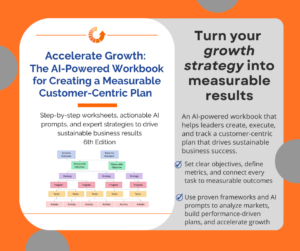
Buy Your Best-Practices Workbook
It sounds simple and it is. People want to know that if they take the time to give you input that you are listening and going to do something with the information. Otherwise you might just create an opportunity for dissatisfaction. Gartner found that gathering customer feedback can increase cross-sell and up-sell effectiveness by 15 to 20% and that enterprises that implement formal, periodic surveys to capture customer sentiment and implement the recommendations spend 25% less on customer retention programs.
2. Talk to Defectors
Even former customers can provide valuable information. Conduct a separate survey to find out specifically what caused them to leave. Don’t settle for the “run of the mill” answers such as price or service. Probing deeper can reveal more useful information. Former customers may be more open and likely to respond to a third party if they know their responses will not be attributed to a specific person.
3. Establish Formal Feedback Processes
Encourage and reward customers for providing ongoing candid feedback. Use your communication vehicles such as your website, company literature and correspondence to promote customer participation in feedback forms on your site, participate in focus groups, complete comment cards, attend user forums, etc. Make the channels as convenient as possible. The more aware that customers are that your company wants and values their feedback, the more likely they will be to provide it.
4. Glean Insights From the Feedback
Feedback is only useful if the analysis of the data enables you to gain some valuable insights into for example: preferred communication channels, underlying drivers of customer loyalty, etc.
5. Leverage Technology
Analyst firm Gartner report that some organizations use more than 100 different tools across their organization to collect customer feedback. Today itís common for most organizations to have as many as a dozen tools in place. Some of these tools frequently duplicate efforts and in some situations it takes a long time to tabulate and analyze the data. Having the information too late may result in lost opportunities. Coordinating the data from all of these feedback resources and having the data available in a timely fashion can be a daunting task without technology. And technology will enable you to complete the next tip.
6. Provide Rapid Response
A TARP Worldwide financial services industry study found that among customers who registered a complaint, 54-70 % will buy again if their complaint is resolved. That figure goes up to 95% if the customer feels the complaint was resolved quickly. Customers whose complaints are resolved satisfactorily tell an average of five people about their good treatment. Therefore, it’s important to act quickly in addressing and resolving customer concerns. Let customers know whenever your company initiates change as a result of their suggestions or feedback, and what specific changes you made. Doing so will encourage future feedback and assist you in continuing to improve your business. On the flip side, if you’re not able to use a customer’s suggestion, let them know that you heard their request and appreciate their feedback, and explain why you’re not able to use it.
7. Take Action
Many organizations collect customer feedback, but fall short when it comes to using and acting on that data. The feedback that your company collects is only valuable if you use it. Make customer feedback matter by taking action. Put together an action plan that focuses on addressing and resolving any areas that are causing your customers concern, as well as improving your existing customer relationships (i.e. by building on what ís working). In conjunction, establish standards of excellence and share best practices with others in your organization.
Measure and monitor results. Once you take action, be sure to measure and monitor the impact of the changes. Some areas you may want to consider measuring include positive changes to your customer retention rate, revenue per customer, customer referrals, customers saved due to feedback, etc.
8. Use Benchmarking to Set Performance Targets for Improvement
Once you have this process in place you can become more proactive by setting performance improvement targets. Benchmarking your company’s performance against industry leaders can provide one data point that can help with setting customer retention performance targets.
A little common sense can go a long way toward improving customer retention. Learn more about to master customer-centric marketing.
FAQ:
A: Retaining valuable customers is essential for business health. While not all factors are controllable, focusing on those within your control—like understanding customer needs and acting on feedback—can significantly improve retention.
A:
- Be customer-centric: Continuously gather and analyze customer feedback to understand why they stay or leave, then communicate and act on these insights organization-wide.
- Talk to defectors: Survey former customers to uncover deeper reasons for their departure beyond surface issues like price or service.
- Establish formal feedback processes: Encourage ongoing, candid customer input through convenient channels like surveys, focus groups, and user forums.
- Glean insights from feedback: Analyze data to identify loyalty drivers and preferred communication channels.
- Leverage technology: Use integrated tools to collect, coordinate, and analyze feedback efficiently and in real time.
- Provide rapid response: Address complaints quickly and communicate actions taken to build trust and encourage future feedback.
- Take action: Develop and implement plans to resolve issues and enhance customer relationships, then measure the impact on retention and referrals.
- Use benchmarking: Compare performance against industry leaders to set realistic retention improvement targets.
A: Customers who see their feedback valued and acted upon feel appreciated and are more likely to remain loyal and advocate for your brand, while unresolved issues can lead to defection.
A: Monitor customer retention rates, revenue per customer, referral rates, and the number of customers saved through feedback-driven interventions.
A: VisionEdge Marketing offers advisory services and tools to design effective feedback systems, action plans, and measurement frameworks that strengthen customer loyalty.
Recent Posts
- Focus on Solving Customer Pain Points to Future-Proof Your Company | What’s Your Edge?
- Customer-Centricity in M&A: The Accelerant for Post-Deal Value
- How Strategic Clarity Drives Growth, Profitability, and Customer Value
- Breaking Through Stagnant Growth with a Customer-Centric, Process-Driven Approach | WYE?
- Why Lack of Accountability is Stalling Your Organization’s Growth


You must be logged in to post a comment.