
Speak the Right Language to Gain Your CFO’s Support
As CFO’s (Chief Financial Officers) become more responsible for activities such as prioritizing company resources, developing and communicating the company strategy, making IT decisions, and implementing performance programs, CMOs, CGOs, and CROs (Chief Marketing, Growth, and Revenue Officers) will need to better quantify and measure the value of their growth strategies. Without a doubt, with the International Financial Reporting Standards (IFRS) accounting standards, more financial influence and control over Marketing and other growth-oriented teams is on the way. More and more CFOs are participating in developing and driving organic growth strategies.
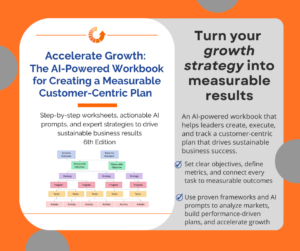
Buy Your Best-Practices Workbook
Collaboration is Critical to Everyone’s Success
To respond to today’s fast-changing market environment, organizations need high levels of collaboration and trust between finance and the teams responsible for growth – especially Marketing and Sales. With the CFO and the CMOs, CGOs, and CROs are all in pursuit of growth, it will be imperative for these other C-Suite members to establish high levels of collaboration and trust with the CFO. These growth champions in the organization can take the lead by improving their ability to “speak the business.” How?

Use these Five Tips to Forge a Stronger Alliance with Your CFO
1. Start with alignment. Having a clear line of sight between marketing initiatives and the business enables marketers to make both strategic and tactical decisions regarding customers, channels, touchpoints, and content investments. Alignment is the gateway to understanding what data you will need, what analytics to apply, and what metrics need to populate your dashboard. The key is for marketing and finance to work together to define performance metrics that contribute to the enterprise’s strategic objectives.
2. Select relevant metrics. This is especially important for CMOs and CGOs. A study by CFO.com found that CMOs report sharing marketing information with their CFOs than CFOs report receiving. In that same study, most CFOs believed that marketing could have a positive impact on growth and profitability, but 40% of them didn’t know if CMOs were even trying to do so. This gap can be closed by picking the metrics that enable you to know what is and isn’t working and that demonstrate Marketing’s value to the business. You want metrics that help you make investment decisions and appropriate course corrections, not metrics that are easy to collect or “cool.”
3. Build business acumen. CMOs and CGOs with business and financial acumen understand that they are using company funds to make investments on behalf of the company. Best-in-class marketers build business acumen and customer intelligence so they can create value for customers and the company. Think beyond this quarter’s “leads” or this year’s integrated growth campaigns and content. Understand your customers’ journey and help your company validate, penetrate, and dominate markets.
4. Embrace data, analytics, and modeling to facilitate market, customer, and product innovation, and competitive move decisions. The explosion of big data and advanced analytics creates a daunting task for CMOs, CGOs, and CROs to collect, manage, and turn data into meaningful intelligence. It behooves these members of the C-Suite to work closely with CFOs who are now playing a much larger role in ensuring that the structures and investments are in place to maximize the organization’s enterprise-wide analytics capability.
5. Take a portfolio management approach. Most CFOs’ understand the concept of portfolio management. CMOs and CGOs are in essence, portfolio managers. Your portfolio is comprised of a mix of emerging customers and markets, and goals such as retaining and/or profitably growing a set of customers and markets. Build a growth plan that represents this portfolio mix and how you are allocating the funds across each component. Clarify how the investments are intended to contribute to the business and its growth, and then develop a dashboard that monitors and communicates marketing’s portfolio investment performance.
Forging an explicit collaborative alliance with finance is critical to the company’s and your teams’ success. Finance is not an adversary. Seek to create an ongoing collaborative relationship with the CFO and the finance team.
FAQ:
A: CFOs are increasingly involved in resource prioritization, strategy communication, IT decisions, and performance programs—and financial standards (e.g., IFRS) are accelerating finance’s influence over growth investments. Growth leaders must quantify and measure the value of growth strategies to earn support and protect investment.
A: Collaboration and trust. In volatile markets, organizations need high-trust partnerships between Finance and the teams responsible for growth—especially Marketing and Sales—because everyone is ultimately accountable for profitable growth.
A: Start with alignment. Establish clear line-of-sight between marketing initiatives and business outcomes. Alignment clarifies what data is needed, what analytics to apply, and which metrics should populate dashboards—ideally defined jointly by Marketing and Finance.
A: Choose metrics that show what is and isn’t working, enable investment decisions and course corrections, and demonstrate Marketing’s contribution to growth and profitability—not metrics that are merely easy to collect or “interesting.” This closes the common gap where CMOs believe they share information, but CFOs say they don’t receive what they need.
A: Because Marketing is investing company funds on behalf of the enterprise. Best-in-class leaders pair business/financial acumen with customer intelligence to create value—thinking beyond short-term lead counts to market validation, penetration, and dominance.
A: Treat analytics as an enterprise capability. The data explosion makes it difficult to turn information into intelligence; CFOs are increasingly responsible for ensuring the right structures and investments exist. Growth leaders should partner with Finance to leverage analytics for innovation and competitive decisions.
A: It frames Marketing as a portfolio of investments across customer/market segments and growth goals (acquire, retain, expand). Clarify allocation, intended contribution, and performance monitoring—then use a dashboard to communicate portfolio performance in business terms CFOs recognize.
A: Finance is not an adversary. The goal is an explicit, ongoing alliance—shared definitions of success, shared metrics, and shared accountability for profitable growth.
Recent Posts
- Focus on Solving Customer Pain Points to Future-Proof Your Company | What’s Your Edge?
- Customer-Centricity in M&A: The Accelerant for Post-Deal Value
- How Strategic Clarity Drives Growth, Profitability, and Customer Value
- Breaking Through Stagnant Growth with a Customer-Centric, Process-Driven Approach | WYE?
- Why Lack of Accountability is Stalling Your Organization’s Growth


You must be logged in to post a comment.