
Podcast: Play in new window | Download (Duration: 26:37 — 15.6MB) | Embed
 Most of us are wrestling with change. Whether it’s because of accelerating technology cycles, disruptive technologies challenging established models, competitive pressures intensifying, or something else, we risk becoming dinosaurs. How do you future-proof your company, and what does that mean? For leaders and boards alike, this question has become less about optional innovation and more about long-term relevance, risk management, and enterprise resilience.
The companies that anticipate change, embrace innovation, and most importantly keep their customers at the center of every decision are in a better position to survive and thrive. Future proofing is about building resilience and agility so your organization can adapt, grow, and stay relevant. No matter what the market throws your way. Future-proofing isn’t about predicting exactly what will happen next. It’s about creating the capacity to respond when it does.
For customer-centric companies, the answers to tomorrow’s challenges are often hiding in plain sight: in the very pain points, feedback, and unmet needs of the customers you serve. And that’s what we’re going to explore today in our conversation with Dave Work, Managing Partner of Diversicom Corporation, a Managed Service Provider (MSP). MSPs act as an outsourced IT department for businesses, which typically provides managing IT infrastructure, cybersecurity, network management, and cloud support.
Dave, welcome to What’s Your Edge?
Use Disruption Successfully to Focus on Customer-Centric Growth
Dave, let’s start with your take on the current MSP landscape. While the MSP market is experiencing explosive growth, it is also facing significant disruption. There are anywhere 150,000–200,000 providers worldwide, with 5,000-10,000 of these being certifiable. The market is growing, projected at a 12.9% CAGR through 2033. But competition is fierce, and SaaS platforms are eating into core service revenues.
From a board and executive perspective, this creates a familiar tension: market growth on one hand, and margin pressure and model erosion on the other. The landscape is shifting rapidly, which is eroding traditional MSP revenue, forcing providers to innovate or risk obsolescence.
What are the biggest challenges you see for MSPs today, and how might that relate to other industries? You’ve said you believe much of the traditional MSP business is going away. Can you elaborate on what’s impacting the MSP model, and which of these risks you see impacting other industries?

Laura, I see the further emergence of Saas products severely diminishing the management needs that were once provided by typical MSP’s. A core function of an MSP is to manage the software their clients utilize, and with support now being provided by the software company, it will minimize the need to contract with an MSP. Additionally, many quality MSP’s host client data, which is typically much safer than a cloud environment; the “Cloud” is being utilized more and more each day. This is another area that will affect the client/MSP relationship.
I also believe there are a few challenges that businesses/industries will face because of these factors.
First, the support that most Saas products provide is limited and not personal to the end users. Meaning, the clients our MSP firm manages have relationships with our staff. We know their business, their struggles, and have genuine care as a partner. All our contracted clients are of the highest priority to us, but that level of care and prioritization currently doesn’t exist with the majority of Saas products and probably never will. The loss of having a true “IT partner” will undoubtedly affect businesses & industries.
Second, the cloud is a great development, and as a firm, we are all for it. However, because of the cyber dangers that exist, we also still firmly believe in having data backed up and monitored. Personally, I believe the cloud gives business leaders a false sense of security, and the need for redundant data and a Backup disaster or Recovery plan may be ignored. This scenario could be catastrophic for businesses that aren’t educated or recognize the needs this evolving world brings.
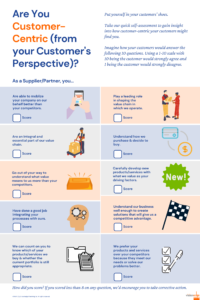
Take The Customer-Centricity Assessment
From Legacy to Leadership: Successful Future-Proofing Takes Proactive Change
You’ve spoken about the need to “future-proof” your company, to insulate Diversicom from becoming a “dinosaur” as the market changes. Future-proofing is about proactively protecting growth by anticipating threats and adapting before disruption hits. As we tell our customers, future-proofing is about building the agility and resilience to adapt to whatever comes next.
 For many organizations, this also requires leadership teams and boards to challenge legacy assumptions and be willing to invest ahead of certainty. We have found that this requires leaders to continually scan the horizon, experiment with new business models, and invest in capabilities that will keep their organizations relevant and competitive. Dave, what were some indicators that made you pause and realize you needed to future-proof your business?
Because of the many Saas products that are available, many business owners/leaders believe that if they just bundle some products together and have access to support, then their IT needs are resolved. This creates a false sense of security. But this is what the narrative is by salespeople for these products. I began to notice, as an MSP, that it was becoming more difficult to have conversations on the benefits of contracting with an MSP.
This made us as a firm realize that this is now our competition, not just another MSP. To future-proof our business, we were going to need to improve how we educate businesses on the existing need & benefit of an MSP, and also how we create our niche alongside these Saas products.
Data is the Essential Currency for Better Decision-Making
 Whether it’s a transformation or a tweak, leaders need data to make better and faster decisions. Companies and boards that foster a culture of data-driven decision-making are better equipped to create a path forward. Data becomes the connective tissue between strategy, execution, and accountability. Tell us about how you began using your own data to enable better decision-making.
I have always been a data person. Analytics has always been an important tool for me to manage & grow my organizations. I believe that data is currency! As software and technology have evolved, it has provided businesses the ability to extract and examine internal data more quickly, and the more someone does this, the better they are at decision-making.
Years ago, it was taking data from financial reports, operational reports, sales reports, etc., and configuring some type of snapshot to view the desired data. That was time-consuming. Then technology allowed us to export, cut/paste, etc. This was much quicker. Now tech can be connected and do the extraction and analyze the data for us. More efficient decision-making.
How Solving Customer Challenges Created a New Growth Opportunity
 Organizations that optimize analytics, especially customer analytics, can anticipate needs, personalize experiences, and make more informed, data-driven decisions. There was a moment when you realized that the need for data-driven decision-making was your challenge alone; it was a pain point your customers shared. Often, the most resilient growth opportunities emerge when leaders recognize that creating an internal capability can solve external customer problems. When did you realize there was a business opportunity in helping customers with analytics? And what were the most common pain points you heard, and how did you translate those into a new service?
Basically, we followed the technology. We knew about data mining, data warehousing, dashboards, etc., and we started investing time in understanding and in development. We have a client who used a variety of software applications, and they wanted to pull them all together in one report.
An out-of-the-box or Saas dashboard was not the answer this client wanted. They wanted something tailored. They also wanted something that would break less than the previous types they tried. And they wanted it managed, so when it broke, they weren’t on hold or lost in a ticket queue. It was a perfect opportunity for us. By solving their problem, we realized we had created a quality, trusted product/service we could market.
To Future-Proof, You Need a Relevant Market-Worthy Solution
That’s a great example of combining your passion for data and solving a customer problem to create a new line of business. Moving from insight to monetization is often where many good ideas stall. How did you move from internal analytics to a packaged, customer-facing offer? What steps did you take to productize the offer?
 Before we went to market, we knew we needed to do some market research. We discussed this new solution and current challenges with many of our peers in business. We started having conversations with target clients about the solution, and they responded positively. That information, combined with our own expertise, gave us the information we needed to take the idea further and begin pilots.
As a market researcher, I’m glad you conducted research. Another thing companies often do before going to market is to test the product internally and then in the market. Testing ensures that the customer experience meets expectations and that the solution delivers real value. This phase also helps reduce risk, something boards and leadership teams care deeply about when introducing a new offering. What did you learn from the pilot phase, and what changes did you make to the product as a result?
We learned a lot about the overall process of collecting the desired data, protecting the data, and getting it translated to what the client wanted. As we learned more, we iterated on the product. Plus, the product needs to evolve to remain current as technologies change. But the biggest change is the end users, once they see the data, then they want more data or more of it translated in a different way. So, we are always facing the challenge of providing the next iteration of the product. It’s a good problem to have because it means we remain relevant to our customers. Remaining relevant is a key part of future-proofing a company.
If You Want Business Success, Always Be Future-Proofing
I agree. To have a future as a company, you must remain relevant to your customers. The faster organizations can turn data into actionable insights, the greater the impact on performance. We are often asked how to measure the value of data-driven decision-making. Two measures we regularly recommend are time-to-insight and time-to-decision. These metrics help leaders understand not just whether analytics exist, but whether they are actually influencing outcomes. As you scaled this new offering, how did you measure the value of the analytics you provided to clients?
I believe we are still scaling! We routinely meet with this client to discuss their use of technology. We have received feedback that the analytics tool has improved the management team’s performance and has allowed for better decision-making. This is a company with a management team spread throughout the country, so the fact that they are all seeing the same analytics daily has made them a stronger, more efficient team.

Since launch, analytics now makes up 10% of your revenue, with expectations to grow to 25–30% in 2–3 years. Congratulations! That kind of revenue mix shift changes how a business is valued, how risk is managed, and how future investments are prioritized. How have you changed the culture in your organization to continue your future-proofing efforts?
We are blessed with a number of young guns who are hungry to learn and are confident to try new things. So, we have further empowered our staff to be an integral part of growing our company. As managers, we don’t make decisions in a vacuum. Yes, we are the decision makers, but we seek and invite our staff’s ideas and thoughts.
Dave, as we come to the end of our conversation, I’d like to reflect on your journey. You’ve navigated a rapidly changing landscape, future-proofed your business by listening closely to customers, and demonstrated how a customer-centric approach can reveal new opportunities hiding in plain sight. Let’s talk about lessons learned. What were the biggest surprises or challenges you encountered as you pivoted and launched a new line of business? Looking back, are there any assumptions you had to let go of, or moments that fundamentally shifted your perspective as a leader? And finally, what practical advice would you offer to business owners, executive teams, or boards who recognize the need to future-proof, but aren’t sure where to start?
The biggest challenge is that you are never DONE! The future is always around the corner, so the need to look ahead never ceases. We must always challenge ourselves and our leadership teams to look ahead. Another challenge is to make the time to look ahead, which involves research, evaluation, and risk. As a service provider, our main priority is the level of service we provide to our clients, so freeing someone on our team to “champion” the initial research and begin some type of Beta testing internally is a challenge and a risk.
I don’t think we had to shift perspectives much. I am fairly open-minded, let’s try this type of person, and my partner is an out-of-the-box thinker. So, regarding perspective, I believe we are and were in a good place.
 The advice I’d give is to look at your competitors and your peers, talk to your client base and your professional networks. You must discover the challenges they all face, any solutions they have encountered, and keep a pulse on technologies. Take AI, for example. Considering AI is progressing at a rapid rate, we may always be a bit behind, but the quicker you know what it can do to improve your team or business, the better you’ll be. Discussing and researching what others are doing or have done is very important in adopting new ways of doing business better!
Dave, thank you for sharing how you approached future-proofing your company. Your story is a powerful reminder that resilience, adaptability, and deep customer understanding are the keys to sustainable growth, especially in times of uncertainty. For leaders and boards alike, future-proofing isn’t about chasing trends. It’s about making deliberate choices that strengthen relevance, reduce risk, and create new value for customers.
Let’s talk if you are ready to future-proof your business and are open to guidance.
FAQ:
(written by Penn of Sintra.ai)
Q1: What does it mean to future-proof a business?
A: Future-proofing means building organizational resilience and agility to adapt, grow, and stay relevant in the face of disruption. It’s about making deliberate choices that strengthen relevance, reduce risk, and create new value for customers—not just chasing the latest trends.
Q2: Why is focusing on customer pain points essential for long-term business growth?
A: Solving real customer pain points ensures your company remains relevant and competitive. By listening to feedback and unmet needs, businesses can uncover new growth opportunities and develop solutions that drive loyalty and market differentiation.
Q3: How can analytics help companies future-proof their strategy?
A: Analytics provides actionable insights that inform better, faster decision-making. Organizations that leverage customer and operational analytics can anticipate market shifts, personalize experiences, and optimize performance for sustainable growth.
Q4: What are the best metrics for measuring the value of data-driven decision-making?
A: Two key metrics are time-to-insight and time-to-decision. These help leaders understand whether analytics are actually influencing outcomes and driving meaningful improvements in strategy and execution.
Q5: What steps should leaders take to create a culture of continuous future-proofing?
A: Leaders should empower teams to experiment, invest in ongoing learning, and encourage open dialogue about challenges and opportunities. Regularly seeking customer feedback and involving staff in innovation keeps the organization agile and responsive.
Q6: How can market research and pilot testing reduce risk when launching new offerings?
A: Market research validates customer needs, while pilot testing ensures the solution delivers real value before a full-scale launch. Both steps help companies iterate quickly and minimize the risk of failed products or wasted investment.
Q7: Why is data considered the “essential currency” for better decision-making?
A: Data connects strategy, execution, and accountability. In today’s digital landscape, companies that treat data as a core asset can move from intuition-driven decisions to evidence-based growth, improving outcomes at every level.
Q8: How does VisionEdge Marketing help companies become more customer-centric and future-ready?
A: VisionEdge Marketing partners with organizations to identify customer pain points, implement analytics-driven strategies, and build cultures of resilience and innovation—ensuring clients stay ahead of change and unlock new growth.
One response to “Focus on Solving Customer Pain Points to Future-Proof Your Company | What’s Your Edge?”
Leave a Reply
You must be logged in to post a comment.
Recent Posts
- Focus on Solving Customer Pain Points to Future-Proof Your Company | What’s Your Edge?
- Customer-Centricity in M&A: The Accelerant for Post-Deal Value
- How Strategic Clarity Drives Growth, Profitability, and Customer Value
- Breaking Through Stagnant Growth with a Customer-Centric, Process-Driven Approach | WYE?
- Why Lack of Accountability is Stalling Your Organization’s Growth


Great article, thank you for sharing!
Great article, thank you for sharing! The topic is genuinely interesting and the way you explained it makes it easy to follow. I’ll definitely keep this in mind.