
 Most mid-market B2B companies can tell you what happened last quarter.
Revenue. Pipeline. Win rates. Customer Acquisition Cost (CAC). Website traffic. Sales cycle length.
And yet, when performance slips, the conversation often sounds the same:
- “We’re down. But we don’t know why.”
- “We’re busy. But we can’t prove what’s working.”
- “We have dashboards. But we don’t trust the numbers enough to steer with them.”
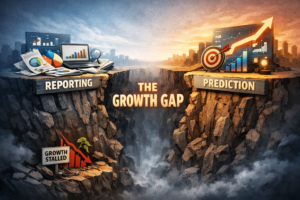
That gap between reporting results and predicting outcomes is where growth stalls.
The Case for Replacing Random Acts With Strong Management
When leadership teams lack decision-grade measurement, something predictable happens.
Teams fill the gap with activity:
- More campaigns
- More content
- More pipeline programs
- More dashboards
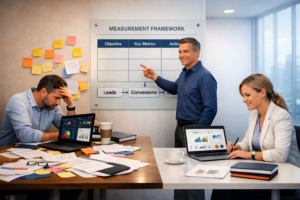
Each initiative may appear reasonable on its own. But without a clear logic chain connecting customer insight to performance outcomes, the organization drifts into what we call random acts.
Random acts occur when:
- Activity replaces evidence
- Metrics measure motion rather than impact
- Teams optimize local goals rather than enterprise outcomes
Instead of steering growth deliberately, the organization reacts to symptoms after results appear.
A well-designed measurement system does the opposite. It replaces random acts with disciplined cause-and-effect management.
(See how disconnected dashboards create random acts and erode performance: Disconnected Dashboards)
When You Lack Powerful Customer Insights, the Gap Increases
 The measurement problem isn’t a lack of data. It’s a lack of decision-grade insight.
Forrester’s research captures the issue bluntly: 64% of B2B marketing leaders say their organization doesn’t trust marketing measurement for decision-making. Even more telling, 61% say their measurement and analytics are not well aligned with organizational objectives and/or growth strategies.
In other words, many dashboards are optimized for hindsight: they summarize activity and outcomes after the fact. They are far less effective at delivering foresight: early signals that explain what is happening in the market, what is changing in the buying journey, and what actions will most reliably improve performance.
If you want foresight, you need to measure the why behind the buy and connect it to outcomes with a logic chain.
Hindsight Metrics Alone Will Lead to Sure-Fire Failure Modes
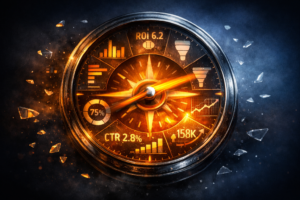 Lagging indicators matter. Boards expect them. CFOs require them. Leaders need them.
But lagging indicators alone create three predictable failure modes:
- Post-mortems instead of course corrections: You learn you missed the quarter after the quarter is over.
- Activity inflation: Teams optimize what is easy to count (volume) rather than what is hard to prove (impact).
- Attribution arguments: When measurement isn’t trusted, decisions default to opinion, hierarchy, or habit.
The result is a familiar pattern: more effort, more tools, more reports, without a corresponding improvement in growth trajectory.
Customer Value as a Leading Indicator is Often a Missing Link
In B2B, the “why behind the buy” is rarely a single variable. It is a system.
Buying decisions are shaped by:
- Perceived risk (career risk, supplier risk, implementation risk)
- Buying group dynamics (consensus, conflict, internal politics)
- Value clarity (economic impact, proof, differentiation)
- Friction (procurement, security review, integration, onboarding)
- Competitive displacement (status quo, incumbent, “do nothing”)
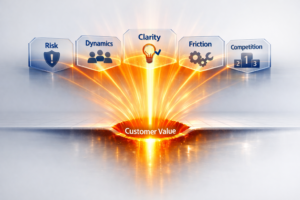 It is essential to measure financial outcomes such as revenue and profit. But when those are the only metrics tracked, organizations miss the upstream shifts that drive those outcomes, such as win rate, referral rate, and share of wallet.
When captured consistently, insights based on delivering customer value become leading indicators, telling you:
- What buyers are trying to accomplish
- What is slowing them down
- What they believe (and misbelieve) about your category
- What evidence do they need to move forward
- What makes them choose an alternative
That is how you move from “reporting” to “steering.”
(For deeper guidance on leveraging customer insights for growth: Customer Insights Spur Growth)
Know How to Close the Gap With the Best Logic Chain: Link Insight to Outcomes
A logic chain is a disciplined cause-and-effect construct connecting four elements:
 Customer Evidence. What buyers experience, believe, and do:
- Customer effort during evaluation
- Implementation concerns
- Buying group alignment
- Perceived differentiation
- Value clarity
Performance Indicators (Leading + Lagging). Signals that reveal whether the system is working:
- Stage conversion rates
- Sales cycle time by stage
- Buying group engagement depth
- Time to onboarding value
- Customer effort scores
Decisions and Investments. Operational choices leaders make:
- Messaging updates
- Sales enablement changes
- Onboarding redesign
- Channel strategy adjustments
- Customer success investments
Business Outcomes. Results that matter to the board and C-suite:
- Win rate
- Customer acquisition efficiency
- Retention and renewal rates
- Expansion and share of wallet
- Referral rates
When these elements are explicitly connected, measurement becomes predictive rather than descriptive.
Without a logic chain, dashboards show activity but rarely explain performance.
A Practical Example
- Customer evidence: Win/loss interviews that show buyers perceive implementation risk as high and don’t trust time-to-value claims
- Leading indicators: Sales-stage conversion from evaluation to selection, security review cycle time, engagement with proof assets, deals requiring executive escalation
- Decisions: Update messaging to quantify time-to-value, add implementation proof points, redesign onboarding plan, equip sales with a risk-reversal narrative
- Lagging outcomes: Higher stage conversion, shorter cycle time, improved win rate, and higher expansion
The logic chain doesn’t eliminate uncertainty. It makes uncertainty measurable and manageable.
How to Use Foresight Measures to Upgrade Your Performance Management Dashboard
If your performance dashboard is dominated by activity and lagging outcomes, you are not alone. The fix is not more metrics. It is better-aligned metrics organized to reflect how growth actually happens.
A board-ready performance dashboard includes four categories:
- Outcome Metrics (Lagging). These are results the board and executive team must ultimately report:
- Revenue (new, renewal, expansion)
- Net revenue retention
- Pipeline coverage and velocity
- Win rate
- Average sales price
- Contribution margin

- Value-Creation Indicators (Leading). These metrics reveal whether buyers perceive value and trust your solution:
- Strength and use of proof assets (case studies, ROI models)
- Buying-group engagement depth
- Competitive displacement indicators
- Perceived risk signals in deal reviews
- Customer effort during evaluation
(See how customer insights drive C-suite decision-making)
- Execution Metrics (Operational Leading Indicators). Show whether the revenue engine is functioning effectively:
- Stage conversion rates
- Sales cycle time by stage
- Partner influence in the pipeline
- Enablement adoption in deals
- Onboarding milestone completion
- Customer Insight Metrics. Ensure continuous measurement of the why behind the buy:
- Win/loss interview cadence
- Voice-of-customer coverage
- Customer effort and friction indicators
- Reasons for no decision
- Renewal risk signals
Operationalized insight keeps the dashboard actionable rather than a static reporting tool.
(For tips on running effective Voice-of-Customer research)
The 3 Common Causes that Destroy Performance Management Dashboards
 In our work with B2B leadership teams, measurement gaps typically show up in one or more of these ways:
Gap 1: Dashboards measure what is easy, not what is material: Many performance dashboards over-index on activity measures (leads, clicks, meetings). When activity dominates, organizations inadvertently encourage random acts resulting in motion without measurable progress.
Gap 2: Metrics are not segmented by how revenue is created. B2B revenue varies by:
- Segment (mid-market vs. enterprise)
- Buying scenario (new purchase vs. renewal vs. expansion)
- Channel (direct vs. partner)
- Buying group composition
Aggregated metrics obscure the signal. Leaders manage averages, not the real problem.
Gap 3: Customer insight is episodic, not operational: Research conducted only during product launches, missed quarters, or new leadership arrivals produces hindsight, not foresight. Operational insight is continuous.
How to Move from Hindsight to Foresight: Results from a Logic Chain Audit
Moving from hindsight to foresight begins with an audit, not a tool audit, but a logic chain audit that answers:
- What decisions is this dashboard meant to support?
- What customer evidence explains performance?
- Which metrics are truly predictive leading indicators?
- Where are the breaks in the chain?
- What changes can improve foresight within 30–60 days?
The output: a tighter scorecard and a clearer operating rhythm, not more reporting.
A simple way to begin this week:
- Pick one lagging outcome you care about (e.g., win rate in a priority segment).
- Ask: What are the three most likely upstream causes?
- For each cause, define:
- Customer evidence needed
- One leading indicator to track weekly
- One decision you will make if the indicator moves
 If you cannot answer those questions, your performance dashboard is not a steering system yet.
Need help? Request a dashboard logic chain audit
If your team is producing reports but still debating what to do, a dashboard logic chain audit is a fast, practical way to close the measurement gap.
In a focused working session, we will:
- Clarify the decisions your dashboard must support
- Map your current metrics to a logic chain (insight to indicators to decisions to outcomes)
- Identify the highest-impact gaps (definitions, segmentation, leading indicators, customer evidence)
- Recommend a streamlined dashboard and sustainable governance cadence
Start replacing random acts with disciplined decision-making today. Interested in a dashboard logic chain audit? Reply or reach out, and we’ll schedule a brief scoping call to determine fit.
FAQ: (written by Penn)
Q1) What is the difference between hindsight and foresight in B2B growth measurement?
A) Hindsight measurement reports what already happened (revenue, pipeline, win rate). Foresight measurement provides early signals that explain why performance is changing and what actions will most reliably improve outcomes.
Q2) Why do B2B dashboards often fail to improve performance?
A) Many dashboards prioritize activity and lagging outcomes, not decision-grade insight. When metrics measure motion rather than impact, teams optimize local goals and leadership defaults to post-mortems instead of course corrections.
Q3) What are “random acts” in growth management?
A) Random acts occur when activity replaces evidence: more campaigns, more content, more programs, and more dashboards—without a logic chain connecting customer insight to performance outcomes.
Q4) What is a logic chain in performance measurement?
A) A logic chain is a cause-and-effect construct that connects four elements: customer evidence, performance indicators (leading and lagging), decisions and investments, and business outcomes.
Q5) What is customer evidence in a logic chain?
A) Customer evidence is what buyers experience, believe, and do—such as customer effort during evaluation, implementation concerns, buying group alignment, perceived differentiation, and value clarity.
Q6) What are the leading indicators in B2B growth measurement?
A) Leading indicators are early signals that predict outcomes, such as stage conversion rates, sales cycle time by stage, buying-group engagement depth, time to onboarding value, and customer effort scores.
Q7)What are lagging indicators in B2B growth measurement?
A) Lagging indicators are outcome metrics reported after results occur, such as revenue (new/renewal/expansion), net revenue retention, pipeline coverage and velocity, win rate, average sales price, and contribution margin.
Q8) How do customer insights create foresight?
A) When captured consistently, customer insights reveal the “why behind the buy”—what buyers are trying to accomplish, what slows them down, what evidence they need, and why they choose alternatives—so leaders can adjust messaging, enablement, onboarding, and investments before results decline.
Q9) What should a board-ready performance management dashboard include?
A) A board-ready dashboard includes four categories: outcome metrics (lagging), value-creation indicators (leading), execution metrics (operational leading indicators), and customer insight metrics.
Q10) What are value-creation indicators?
A) Value-creation indicators show whether buyers perceive value and trust, such as strength and use of proof assets, buying-group engagement depth, competitive displacement indicators, perceived risk signals in deal reviews, and customer effort during evaluation.
Q11) What are execution metrics in a performance dashboard?
A) Execution metrics show whether the revenue engine is functioning, such as stage conversion rates, sales cycle time by stage, partner influence in pipeline, enablement adoption in deals, and onboarding milestone completion.
Q12) What are customer insight metrics?
A) Customer insight metrics ensure continuous measurement of buyer reality, such as win/loss interview cadence, voice-of-customer coverage, customer effort and friction indicators, reasons for no decision, and renewal risk signals.
Q13) What are the three common causes that destroy performance dashboards?
A) 1) Measuring what is easy rather than what is material. 2) Failing to segment metrics by how revenue is created (segment, scenario, channel, buying group). 3) Treating customer insight as episodic instead of operational.
Q14) What is a performance management dashboard logic chain audit?
A) A dashboard logic chain audit evaluates whether your measurement system supports decision-making by clarifying the decisions the dashboard must support, identifying the customer evidence that explains performance, validating predictive leading indicators, finding breaks in the chain, and recommending improvements within 30–60 days.
Q15) What are the outcomes of a dashboard logic chain audit?
A) A tighter scorecard, clearer operating rhythm, better-aligned leading indicators, and fewer “random acts”—so leaders can steer growth deliberately rather than react after results appear.
Q16) How can a leadership team start moving from hindsight to foresight this week?
A) Pick one lagging outcome (e.g., win rate in a priority segment). Identify three upstream causes. For each cause, define the customer evidence needed, one leading indicator to track weekly, and one decision you will make if the indicator moves.
Recent Posts
- From Hindsight to Foresight: Closing the Growth Measurement Gap
- Focus on Solving Customer Pain Points to Future-Proof Your Company | What’s Your Edge?
- The Destiny of Siloed Priorities is Random Acts
- The Power of Customer-Led Product Development for Market Growth | What’s Your Edge?
- Footprint Expansion: A Customer-Centric Growth Strategy for Scaling


Leave a Reply
You must be logged in to post a comment.