
 How well Marketing leaders can demonstrate Marketing’s value is key to securing your Marketing budget. The research suggests that many marketers still take an informal approach to budgeting and measurement.
Often budgets are an exercise in reviewing the previous year’s expenditures, what if any modifications are needed at the program level, and then after making these adjustments, tally up the dollars. Frequently these investments are linked to tactics tied to sub-accounts, such as PR, events, digital, search, content, and so on. At most, some type of output measures such as response rates, downloads, registrants, leads, coverage, etc. are used to rationalize the budget.
Best-in-Class Marketing organizations take a different approach. These organizations are transitioning from activity and output based budgets to outcome-based budgets. Outcome-based budgeting changes the internal conversation. Rather than talking about tactics with your leadership team you are now engaged in strategic discussion. Marketing becomes truly accountable for the dollars entrusted to them.
Truly accountable Marketing requires that marketers demonstrate alignment between Marketing expenditures and anticipated results, and that this alignment is being audited and optimized.
The Marketing Budget is a Valuable Strategic Tool
The problem faced by many Marketing professionals is that, traditionally Marketing budgets are based on a percentage of last year’s revenues or budget. This approach almost makes it impossible for Marketing to answer the proverbial question, “Show Me the Money.” Your leadership team wants to know if an investment is made what will it mean for the organization financially, whether this will be in the short term or the long term.
When Marketing can’t connect the dots between the work and investments with impact, value and contribution, the Marketing budget faces risk. Without a perception of accountability and value, CEOs and CFOs will make sweeping, arbitrary decisions about cutting expenditures which ignores the relationship between Marketing spending to effectiveness and produces a short-term focus leading to limited success.
It’s fixable when you move to a budget that is outcome focused. How do you start?
- Clarifying the strategic intent of ALL the Marketing
investments you are going to make - Organize the plan and work of the Marketing organization around business outcomes
- Establish performance targets, measures and metrics that will help you measure the degree to which Marketing is meeting its investment commitments
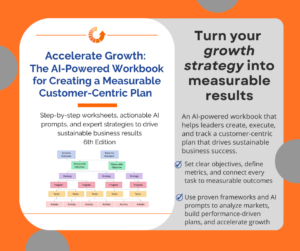
Buy Your Best-Practices Workbook
Measurement is the Foundation to ROI BUT It isn’t the only Factor
Design and select measures and metrics that measure Marketing’s impact on the business. Use metrics that measure both efficiency and effectiveness. Truly accountable Marketing organizations have and consistently use a a measurement management system. Capture performance data as quickly as possible in order to instigate immediate course corrections. Develop a Marketing dashboard that facilitates decisions, helps mitigate risk, and provides insight into Marketing’s contribution.
5 Steps to an Outcome-Based Marketing Budget
Want to make progress on an outcome-based budget? Employ these 5 steps:
- Determine the business outcomes that Marketing is expected to impact.
- Create a Marketing plan tied to these business outcomes.
- Design and select metrics and clear standards of performance that enables marketing to measure its impact, effectiveness, efficiency and value.
- Determine and add the skills, tools, and systems you will need to execute the plan, manage and measure performance.
- Leverage best practices and insights from your dashboard to identify continuous improvement opportunities
This work may require you to create and adopt a performance measurement and management strategy, system and framework. This often requires external expertise.
FAQ:
A: Marketing leaders who can clearly demonstrate value and accountability are more likely to secure and protect budget. When Marketing cannot connect investments to business impact, CEOs and CFOs may make sweeping cuts that ignore the relationship between spending and effectiveness.
A: Many budgets are built informally by reviewing last year’s spend, making incremental program adjustments, and tallying dollars by tactic (PR, events, digital, search, content). These budgets are often justified with output metrics (downloads, registrants, leads, coverage) rather than business outcomes.
A: Outcome-based budgeting shifts the conversation from tactical activity to strategic impact. Instead of funding “things we do,” Marketing allocates investment to the outcomes the business expects Marketing to influence—making Marketing truly accountable for the dollars entrusted to it.
A: A budget should enable Marketing to answer, “If we invest, what will it mean financially—short term and long term?” Outcome-based budgets clarify the strategic intent of investments, align work to business outcomes, and establish measurable commitments.
A: Start by:
- Clarifying the strategic intent of all Marketing investments
- Organizing Marketing’s plan and work around business outcomes
- Establishing performance targets, measures, and metrics to evaluate investment commitments
A: Measurement is foundational to ROI, but it is not the only factor. Accountable Marketing organizations use a measurement management system, capture performance data quickly to enable course correction, and maintain a dashboard that supports decisions, mitigates risk, and demonstrates contribution.
A:
- Determine the business outcomes Marketing is expected to impact.
- Create a Marketing plan tied to those outcomes.
- Design metrics and clear performance standards to measure impact, effectiveness, efficiency, and value.
- Identify the skills, tools, and systems required to execute, manage, and measure performance.
- Use dashboard insights and best practices to drive continuous improvement.
Recent Posts
- Focus on Solving Customer Pain Points to Future-Proof Your Company | What’s Your Edge?
- The Destiny of Siloed Priorities is Random Acts
- The Power of Customer-Led Product Development for Market Growth | What’s Your Edge?
- Footprint Expansion: A Customer-Centric Growth Strategy for Scaling
- The Focus on Right-Fit Customers Yields Faster Profitable Growth | What’s Your Edge


You must be logged in to post a comment.