

How you secure the funding needed to improve Marketing effectiveness and accountability? The first step is to synchronize Marketing activities and costs with business outcomes. This alignment effort should be incorporated into the Marketing planning and budgeting process. The second is step is to make sure we have the right skills, infrastructure and performance management systems in place.
Resistance to change from existing processes and systems, insufficient resources and budget, lack of agreement on how to measure Marketing, are some of the most common reasons we hear from marketers for why they’re struggling with their performance measurement efforts. Being able to demonstrate marketing effectiveness, measure and improve performance and prove Marketing’s value takes an investment; investments we can’t secure until we can demonstrate value. Hence, the Catch-22.
Make Three Key Investments to Help You Improve Markeitng Effectiveness and Measurement
Escape the Marketing effectiveness and accountability Catch-22 by investing in three key areas: training, infrastructure, and benchmarking.
Invest in Your People
Numerous studies confirm the findings in our annual MPM study, that while marketers said it is important to measure marketing costs, orders, average order size and conversion rates, they tend to track metrics that are easiest to collect to measure. According to an Omniture study, the biggest reason marketers struggle to move from measuring metrics to measuring performance is talent.
Over half of the respondents in the Omniture study indicated that they don’t have the training and support need to develop the analytical skills within their ranks in order to glean the valuable insights needed from the data available. What’s holding these organizations back? You guessed it. Budget was the number one reason cited for the lack the talent. And of course, until we have these capabilities it will remain difficult to leverage analytics and data.
Invest in Your Infrastructure to Improve Marketing Effectiveness
Let’s say we have the analytical talent. The next potential hurdle is being able to translate insights from analytical systems immediately into marketing decisions and then use operational systems to execute on these decisions. The challenge is that often these insights are derived from various disparate data sources that house various types of customer data — such as customer profile information and segment data, customer transaction history, and communication history along with lead scoring models. Top that off with the need to append external data related to the market and competitors.
And all this data probably requires systems that can recognize the same customer/prospect across different channels and the ability to access and update information in real time. Real-time and near real-time updates alone require fundamental changes in how marketing databases are designed, managed and analyzed. Organizations often need to be able to revise business rules and execute analytics and update models as quickly as new data becomes available.
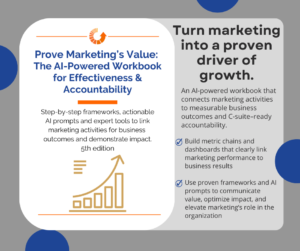
Buy Your Best-Practices Workbook
All of this explains why the entire Marketing infrastructure is increasing in complexity at the same time that speed has become a dominant requirement. As a result Marketing systems and processes need capabilities an order of magnitude better than those most Marketing organizations are using today. So improving marketing effectiveness will take revisiting and investing in the Marketing infrastructure.
Invest in Benchmarking
A benchmark is defined as the standard by which all items of a similar nature can be compared or assessed. Benchmarking is a self-improvement tool. It allows you to compare yourself with others, to identify areas of comparative strengths and weaknesses, and learn how to improve. Robert Camp who published the first book on benchmarking suggests that by using benchmarking to identify and replicate “best practices,” a company can enhance its business performance. Benchmarking is an excellent method for identifying opportunities to improve Marketing effectiveness, measurement, and performance management.
We need benchmarks to know what and by how much we need to improve, yet according to our annual MPM study, only a third of the 400+ respondents indicated they were satisfied with the marketing performance skills. Sixty percent of the respondents don’t do any kind of auditing when it comes to data, analytics, performance target setting, systems, processes, measurement, and reporting. If improving your marketing performance is important to your organization, then it’s time to invest in benchmarking.
In a matter of months, many marketing organizations will begin to work on their next fiscal year plan and budget. Now is the time to take stock of your talent, infrastructure, and how you stack up against peers and best-in-class performers so you can request the funds needed to improve your marketing organization on all fronts.
If you feel trapped in the Marketing effectiveness and accountability Catch-22, give us a call. We can help you escape.
FAQ:
A: The first step is to align Marketing activities and costs with business outcomes, integrating this into the planning and budgeting process. The second is ensuring the right skills, infrastructure, and performance management systems are in place.
A: Resistance to change, insufficient resources, lack of measurement agreement, and inadequate budget are frequent obstacles. Demonstrating value requires investment, but investment is hard to secure without proof of value—a classic Catch-22.
A:
- Training: Develop analytical capabilities within the Marketing team. Many marketers lack the training and support needed to extract insights from data. Budget constraints are often the main barrier.
- Infrastructure: Invest in systems that enable real-time data integration, analytics, and operational execution. Modern marketing requires databases and tools that can handle complex, multi-source data and deliver timely insights.
- Benchmarking: Use benchmarking to compare performance to peers and best-in-class organizations, identifying strengths, weaknesses, and improvement opportunities. Benchmarking informs where and how much to invest for maximum impact.
A: Benchmarking reveals gaps, helps set realistic performance targets, and identifies best practices to adopt. Without it, organizations lack context for improvement and risk falling behind competitors.
A: Assess talent, infrastructure, and benchmarking status to justify funding requests. This proactive approach positions Marketing to secure the resources needed for continuous improvement and measurable business impact.
Recent Posts
- Focus on Solving Customer Pain Points to Future-Proof Your Company | What’s Your Edge?
- Customer-Centricity in M&A: The Accelerant for Post-Deal Value
- How Strategic Clarity Drives Growth, Profitability, and Customer Value
- Breaking Through Stagnant Growth with a Customer-Centric, Process-Driven Approach | WYE?
- Why Lack of Accountability is Stalling Your Organization’s Growth


You must be logged in to post a comment.