
Create an Opportunity Scoring Model to Improve Alignment and Conversion
Identifying potential buyers and sales opportunities is one of the first steps in the sales process and is a critical part of any sales and marketing effort. Sadly, many of us commit three common opportunity development mistakes: we don’t have a clear definition of each of the stages in the opportunity development pipeline, we lack an opportunity development process, and the opportunity development process isn’t aligned with the customer’s buying process.
Companies that engage in effective lead scoring have a 192 percent higher lead qualification rate. Scoring opportunities seem like a simple proposition. Use a scoring process to prioritize the opportunities you receive in order to focus your sales team’s efforts toward those opportunities most likely to turn into paying customers. Makes sense, right? So why do only about a third of B2B marketers engage in the practice?
To design an effective scoring model, engage sales and customers in the scoring process, and develop relevant pipeline marketing metrics. Three key best practices we recommend:
- Develop a scoring schema and model
- Engage sales and customers in the Opportunity Scoring Process
- Measure Beyond the Lead
Adopt these three practices to avoid the most common mistakes with your opportunity development efforts.
- Behaviorally-based. Without clear behaviors that indicate where an opportunity is in the pipeline, there will always be an issue of Sales and Marketing alignment. What Marketing thinks is a qualified lead and what Sales thinks is a qualified lead will vary. By specifying clear behavioral indicators for each stage in the pipeline, it will be clear where an opportunity is located in the pipeline. It is important to spend time working collaboratively with sales on defining the behaviors and agreeing on which stage of the pipeline they belong to. By using specific behaviors to indicate a qualified opportunity, it will be clear that when an individual exhibits this behavior, they meet the definition and are ready to be passed to sales.
- Process. We may initiate various demand generation programs, but the programs are not associated with any process. When Marketing is responsible for initiating opportunities into the pipeline, you need a well-defined process that you will consistently follow and execute.
- Map Your Customer’s Buying Journey. To develop and implement impactful programs, Marketing understands the customer buying process. Once you map the buying process, be sure to validate it. Your customer advisory boards can be a good starting point for this work.
What comes next? Take a look at these other resources you may find useful:
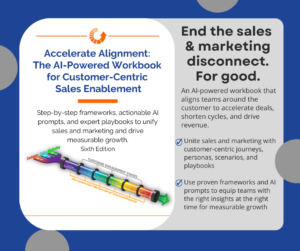
Buy Your Best-Practices Workbook
Check out our workshop for creating a Customer-Centric Pipeline
Download the FREE white paper Don’t Waste Your Bullets: Using Customer Engagement to Accelerate and Improve Alignment

Lead Scoring Improves Forecasting, Sales Alignment & Marketing Effectiveness
Read the case study Pipeline Engineering Improves Forecasting, Sales Alignment & Marketing Effectiveness, which explains how VisionEdge Marketing’s work with ClearCube to redefine their customer buying pipeline to make sales forecasts more reliable and accurate and improve alignment between marketing and sales. This case study discusses the process used over a three month period to create and validate the pipeline stages.
Click here to access Customer case studies
FAQ:
A: (1) No clear definition of pipeline stages, (2) lack of a documented opportunity development process, and (3) misalignment between the process and the customer’s actual buying journey.
A: Companies that engage in effective lead scoring have a 192% higher lead qualification rate—yet only about one-third of B2B marketers use it.
A: Without clear behavioral indicators for each pipeline stage, definitions vary. Marketing and Sales must collaboratively define specific behaviors that indicate where an opportunity truly sits in the pipeline.
A: (1) Develop a scoring schema and model (behaviorally-based), (2) engage Sales and customers in the process, and (3) measure beyond the lead (pipeline contribution and conversion).
A: Specific behaviors remove ambiguity—when an individual exhibits defined behaviors, it’s clear they meet the qualification criteria and are ready to pass to Sales.
A: Demand generation programs need a well-defined, consistently executed process. Without it, opportunities enter the pipeline inconsistently, and alignment breaks down.
A: Your pipeline stages must align with how customers actually buy, not how you think they buy. Validate the map with customer advisory boards before building your scoring model.
A: Improved forecasting accuracy, stronger Sales-Marketing alignment, higher conversion rates, and more reliable pipeline visibility—because everyone shares the same definition of qualified.
Recent Posts
- Focus on Solving Customer Pain Points to Future-Proof Your Company | What’s Your Edge?
- Customer-Centricity in M&A: The Accelerant for Post-Deal Value
- How Strategic Clarity Drives Growth, Profitability, and Customer Value
- Breaking Through Stagnant Growth with a Customer-Centric, Process-Driven Approach | WYE?
- Why Lack of Accountability is Stalling Your Organization’s Growth


You must be logged in to post a comment.