

Trust plays an important role in building revenue. A study conducted by the MIT Sloan School of Management suggests that the degree to which a company is trusted affects the amount and frequency of customer purchases. Seems obvious. If people don’t trust you, they won’t buy from you. However many companies fail to deliberately invest in developing trust with their customers and prospects.
Trust, relationship trust, is developed through real human interaction and is based on familiarity. Today, fewer and fewer companies deliver every experience in person. As companies move more customer experiences to digital non-human options of purchase and service, the potential for human interaction declines. So, trust faces erosion. When trust fades, so does loyalty. Therefore, it is paramount that every company understands how to build and strengthen trust.
Relationship and Brand Trust are Interrelated
Both relationship and brand trust are needed to keep customers and garner their loyalty. Loyalty is created through three attributes:
- Consistent product quality
- Brand characteristics
- Service excellence is received each and every time the customer makes a purchase and uses the product/service.
Once relationship trust slips, brand trust, the positive association customers have with a company and/or its solutions, is at risk. Companies invest in a brand to develop a positive association that will, over tim,e impact loyalty, references, and repeat purchases, thereby ultimately driving growth and profitability. Brand strategy often incorporates broad-reach tactics because a broad reach is a prerequisite for rapid growth. The key to making that reach effective is the ability to create trust. Trust that the company and its solutions will be delivered as promised. Trust that these will be of value. Trust that there will be no surprises. Trust is the common factor that all-powerful brands deliver.
While relationship trust will always remain a critical and powerful component of the purchase equation (especially the repeat purchase equation), brand trust is a powerful driver of rapid growth. It helps convince more people to give your company and its solutions a try. Brand trust helps improve your revenue and margins by enabling the company to charge a price premium. Trust simplifies the buying decision process – especially in today’s market where the power resides with the customers. This shift in power means companies must approach customers differently. Rather than trying to sell, companies should focus on creating trust and being a customer’s advocate.
Proven Practices to Create Customer Trust

 Employ proven practices to develop customer trust.
Companies that have focused on trust and customer advocacy are successful. The leaders in several categories have built their businesses on building and maintaining customer trust. Looking for some examples? Think eBay (which backs each transaction and is a system built on trust), Amazon.com, Charles Schwab, Progressive Insurance, and Bankrate.com. Sprint offers customers its Fair & Flexible plan to prevent abusive overage charges on mobile telephone services. Intel uses virtual advisers to build trust and achieve success in its customer service operation.
Companies are finding that initiatives designed to improve customer satisfaction, build a trusting relationship with customers, and provide full advice and competitive comparisons to advocate for their customers’ best interests are more than paying off. How do you get started? In addition to using your CRM system to develop upsell and cross-sell campaigns, consider using it to create trust-based communication and relationship-building systems. Focus on putting key information into the hands of your customers, such as:
- Your product roadmap to help them with their next-generation product
- unbiased industry pricing for a product, regardless of the company
- information that educates customers on technology alternatives (even those different from what you offer) and helps them make more informed decisions
- information, honestly comparing your product with that of competitors to make buying easier

Customers as Partners
The idea behind customer advocacy is to put the customer’s welfare first and, in doing s,o earn their trust. Once you demonstrate you truly are concerned with their success, your customers will become your partners. Here are nine additional practices to help you strengthen customer trust and advocacy:
- Define the customer experience and then interact with customers in a way that provides the defined experience and makes the customers comfortable.
- Establish a profile of your most valuable customers that includes information about the best times to call to gather input, tell them about new products or services, etc.
- Give customers open, honest, and complete information. A study by the ECSP Europe Business School, entitled ‘The Role of Trust in Consumer Relationships’, found that customer communication drives more than 20% of overall consumer trust in a company, affecting not only the length of customer relationships but also business profitability and customer advocacy (i.e., word-of-mouth).
- Communicate effectively with customers in ways they prefer, with content they request. Spam and junk mail detract from trust because they send the message that you don’t know the customer. Give customers information in a form they can easily understand. Legal, compliance notices, and other ‘jargon’ detract from trust. It makes people wonder what you’re hiding or possibly how you might be taking advantage of them. Short, friendly messages that put cumbersome legal and/or technical jargon into terms they can understand go a long way.
- Define the behavioral standards for employees, especially those with customer/market-facing responsibilities. How soon are phone calls returned? How are problems solved? Escalated?
- Keep confidences. The best way to destroy trust is to breach a confidence. What are your policies for ensuring customer confidential information is secure?
- Provide customers with unbiased advice. Reduce advertising, and instead shift funds to create higher product quality and improved customer satisfaction.
- Cooperate with customers to build better products. Customer Advisory Boards are a good way of doing this. Help customers compare your products and services with those of your competitors.
- Demonstrate awareness of cultural differences. We live in a global economy. Balance standardizing your communication by integrating cultural differences. Keep in mind that your customers and partners may deal with information differently as a result of their perspective
Want to find out how well your company is doing in creating trust? Katie Delahaye Paine of the IPR Commission on Measurement and Evaluation examined how to measure trust and proposed a set of guidelines for measuring and building trust.
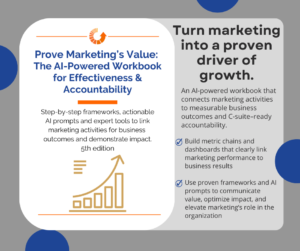
Buy Your Best-Practices Workbook
Creating Trust is for All Company Sizes and is a Cross-Functional Initiative
You don’t have to be a large company to create a culture of trust and customer advocacy. The strategy of customer trust and advocacy extends beyond marketing. It involves the entire organization. Engineering and production must build products to suit customer requirements. IT must recommend and implement tools for the Internet. HR must set new customer-facing hiring criteria. Finance must establish a long-term financial perspective and investment strategy aimed at earning customers’ trust. At the very top, the CEO and other corporate leaders need to change the culture of the organization in a way that reflects the shift of power from the company to the customer.
The Role of Trust in Consumer Relationships study also found that customer trust is influenced by management policies and practices, and by a customer’s previous experience. To address policies and practices, some companies, such as AOL and eBay, have gone so far as to create Directors of Trust, or in the B-to-B space, VPs of Customer Advocacy (AMD and Siemens, for example). These officers are responsible for integrating the company’s activities across marketing, IT, product design, finance, and customer service to ensure that the company represents customers’ interests.
It’s Easy to Start
Ready to start building trust by defining your customer experience and the most valuable customer profile? Begin now with these Customer-Centric programs.
FAQ:
A: Because trust influences how much and how often customers buy. Research cited from MIT Sloan suggests the degree to which a company is trusted affects purchase amount and frequency. The practical implication is straightforward: if customers do not trust you, they will not buy—and many companies still fail to deliberately invest in earning and strengthening trust.
A: Relationship trust is built through real human interaction and familiarity. As more buying and service experiences shift to digital, non-human channels, opportunities for human interaction decline. When interaction declines, trust can erode—and when trust fades, loyalty tends to fade with it. This makes deliberate trust-building a strategic requirement, not a “soft” initiative.
A: They are interrelated and both are necessary for loyalty. Loyalty is reinforced through:
- Consistent product quality
- Brand characteristics
- Service excellence delivered every time
When relationship trust slips, brand trust—the positive association customers have with the company and its solutions—becomes vulnerable. Brand trust supports growth by reducing perceived risk, simplifying decisions, and enabling broader reach to convert into adoption.
A: Brand trust accelerates growth by encouraging more people to “try” your company, improves revenue and margins by enabling price premiums, and simplifies the buying decision—especially in markets where power has shifted to customers. In this environment, companies win by focusing less on selling and more on customer advocacy that earns trust.
A: In addition to using CRM for upsell/cross-sell, use it to enable trust-based communication and relationship-building. Put genuinely useful information in customers’ hands, such as:
- Your product roadmap to support their planning
- Unbiased industry pricing information (even if it is not vendor-specific)
- Education on technology alternatives, including options different from what you offer
- Honest comparisons between your offering and competitors to make buying easier
A: Customer advocacy means putting the customer’s welfare first to earn trust. Operational practices include: defining the intended customer experience and delivering it consistently; building a profile of your most valuable customers (including preferred contact windows and needs); providing open, honest, complete information; communicating in customers’ preferred formats; reducing jargon; setting behavioral standards for customer-facing teams; protecting confidential information; offering unbiased advice; co-developing improvements via advisory boards; and demonstrating cultural awareness in global interactions.
A: No. Creating trust is cross-functional and applies to companies of any size. Engineering and production must deliver to requirements, IT must implement enabling tools, HR must hire and reinforce customer-facing standards, Finance must support long-term trust-building investments, and executive leadership must shape a culture aligned to the shift in power from company to customer. Some organizations formalize this with roles such as Director of Trust or VP of Customer Advocacy to integrate efforts across functions.
Recent Posts
- Focus on Solving Customer Pain Points to Future-Proof Your Company | What’s Your Edge?
- The Destiny of Siloed Priorities is Random Acts
- The Power of Customer-Led Product Development for Market Growth | What’s Your Edge?
- Footprint Expansion: A Customer-Centric Growth Strategy for Scaling
- The Focus on Right-Fit Customers Yields Faster Profitable Growth | What’s Your Edge


You must be logged in to post a comment.