
Podcast: Play in new window | Download (Duration: 5:50 — 3.9MB) | Embed

In this episode of What’s Your Edge, we’re going to explore whether your customer service is helping you avoid becoming a commodity.
When I was a young girl, no matter what part of town we were in, my mom always went to the same service station for gas. In those days, service stations had service attendants who put gas in your tank, checked your oil and tires, made sure you had antifreeze in the winter, and a solution for your windshield wipers. I asked her once why we always went to this specific gas station. Her answer was simple. She said, “I trust them to make sure the car is in good working order. They make sure we’re safe.” Once service attendants were no longer employed, my mom no longer seemed choosy about where we stopped for gas. There were stations on nearly every corner, and she picked the one with the lowest price and easiest to pull into. Whether planned or not, by removing the service attendants from the gas station, the company had cut the connection to the customer. As a result, they began the quick slide to becoming a commodity.
Not long ago, I had the privilege of serving on a panel for an ISBM townhall meeting on this very topic of retaining customer connections. During this town hall, we were all figuring out how to connect remotely, whether for work or learning. As part of the discussion, several people mentioned how they were automating various experiences, such as factory tours. As I listened to how people were automating their customer processes, the gas station story popped into my head. I wondered how many of these companies were setting themselves up to eventually become a commodity.
Stay Close to Your Customers
Whether good times or bad, we should all heed Alexa Von Tobel’s advice about staying close to our customers. As more and more organizations try to keep up with the latest tech trend and increase their focus on digital channels, human to human contact is on the verge of extinction. In fact, according to a report by PwC, a staggering 59% of consumers feel that companies have lost touch with the human element of the customer experience. A significant part of customer experience is about increasing human contact between your brand, your company, and your customers.
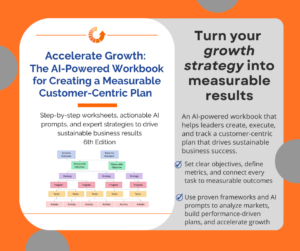
Buy Your Best-Practices Workbook
Studies suggest that no matter what the channel, people want to know there is a real person on the other end. Someone who can assist them properly. That same PwC report found that people want more human contact in the future, not less. 75% of all consumers want technology to be used primarily as a method of facilitating human communication. In a survey about improving business processes, the improvement customers requested the most was better human service. This is particularly important when a customer has a complaint or query that needs to be dealt with.

Joey Coleman, a customer experience expert, claims that customer experience is “the last great differentiator.” Why? Because price and product can be imitated. Unlike price and product, which can be copied, every company can individually design its customer experience. Ron Kaufman, another customer service expert, believes that service is the “DNA” that permeates everything a company does and ultimately determines whether your organization becomes a provider of choice. This means that customer experience and customer service are no longer merely support functions. Service has especially become a feature in its own right.
How to Make Customer Service Your Differentiator
We agree. If you want to create a competitive advantage and improve customer retention, then increase your focus on customer service. Leveraging customer service as a differentiator will require you to truly know your customers. Thinking back to my mom’s gas station, they knew her name and our names, they knew when they last checked all the car’s vitals, and when it was last serviced. Remember, every customer interaction matters and serves as a moment of truth. These attendants used every interaction to demonstrate their expertise, build credibility, and value. And they always went the extra mile. How well do you create value for your customers? Are you like the service station attendant and proactive in taking care of the customer and anticipating their needs?
The attendants clearly had a process for how they serviced the vehicle. Make sure you have well-defined customer service, support, and success processes. Take the time to follow up after you resolve a service issue.
In the end, the key is to engage with your customers how they prefer and not what’s easiest for you.
Take care before your company moves to automate more services as a method of replacing human contact. In nearly every stud,y this has actually shown to have a negative impact on customer experience. Do so at the risk of putting yourself at a competitive disadvantage and becoming a commodity. Avoid becoming a commodity. Use your technology to improve your productivity and the experience your customers have, not to replace human interaction. Not sure whether your human interactions are measuring up? Let’s explore how you can find out.
FAQ:
A1: Because when service removes the human connection, customers default to price and convenience. When the relationship and trust disappear, the offering becomes interchangeable—triggering the slide toward commoditization.
A2: It shows how proactive, human service builds trust and loyalty. When service attendants were removed, the station lost the relationship layer that differentiated it. Without that connection, the customer’s decision criteria shifted to lowest price and easiest access—classic commodity behavior.
A3: Because aggressive automation can unintentionally eliminate human-to-human contact—at the exact moment customers are asking for more of it. Research indicates many consumers feel companies have lost touch with the human element, and they want technology to facilitate human communication rather than replace it.
A4: Because product and price can be imitated. Customer experience is one of the few areas every company can intentionally design in a way that reflects its values, builds trust, and creates preference. Service becomes a feature in its own right, not merely a support function.
A5: Know customers well enough to anticipate needs, treat every interaction as a moment of truth, and use service to demonstrate expertise and credibility. Operationally, it requires well-defined service/support/success processes, consistent execution, and follow-up after issues are resolved.
A6: Automate to improve productivity and customer experience—not to replace human interaction. Over-automation can degrade experience, weaken trust, and increase commoditization risk. The standard is to engage customers how they prefer, not what is easiest for the company.
Recent Posts
- Focus on Solving Customer Pain Points to Future-Proof Your Company | What’s Your Edge?
- Customer-Centricity in M&A: The Accelerant for Post-Deal Value
- How Strategic Clarity Drives Growth, Profitability, and Customer Value
- Breaking Through Stagnant Growth with a Customer-Centric, Process-Driven Approach | WYE?
- Why Lack of Accountability is Stalling Your Organization’s Growth


Leave a Reply
You must be logged in to post a comment.