
Customer Experience (CX) is one of the most highly discussed topics in organizations today. By definition, CX encompasses all interactions across the entire life cycle of the customer relationship. According to a Gartner study, “customer experience ( is the new marketing battlefront. More than two-thirds of marketers responsible say their companies compete mostly on the basis of CX. And in two years’ time, 81% say they expect to be competing mostly or completely on the basis of CX.” Other research by Bain reveals a significant difference in perceptions between what executives think about the experience that they provide customers, versus what customers think about the experience that they receive. They found that while 80% of companies believe they deliver “super experiences,” only 8% of customers agree.
To be effective, a CX strategy must be aligned across the organization and encompass all customer touch points. The survey results found that conflicting key performance indicators and lack of alignment are among the biggest hurdles to achieving CX success.
Address Alignment to Improve Customer Experience
Alignment is especially critical to developing a CX strategy that results in positive, consistent, and brand-relevant experiences for your customers. Your business must align organizational goals between departments and lines of business to facilitate the best customer experience possible.
The first step in moving your CX initiative forward is to fully understand the actual customer experience. The saying, “walk-a-mile in their shoes” could not be more apropos. One of the best ways to begin to capture the customer experience is with a journey mapping exercise. This process helps you understand what it is like for your customer to interact with your business. The good, the bad, and the ugly of your customers’ experience becomes apparent through this exercise. Once you have the map, you can begin to prioritize your next steps.

Define Your Service Model
Customer experience has a tremendous impact on customer loyalty. How a customer engages with your organization in order to do business with you is known as your service model.
Your service model consists of various touch points that set the tone for overall customer satisfaction, trust, and loyalty. These touch points include interactions across all the functions within your organization – Marketing, Sales, Service, Operations, Product, Finance, and so on–from transactions via phone, meetings with account teams, receipt and payment of invoices, to using the website and social media channels.
Satisfaction at each of these touch points should be measured and managed because each one influences loyalty–positive sentiment, purchases, references, etc. If the service model meets your customers’ needs and expectations, they will be loyal and become brand advocates. Strong advocacy demonstrated by referrals reduces your acquisition costs and sales cycle and improves your win rate.
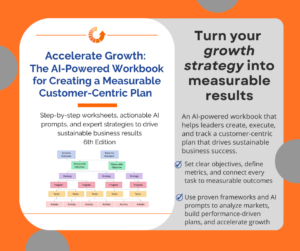
Buy Your Best-Practices Workbook
To Improve Customer Experience: Capture Critical Touch Points
Start with two key steps to guide the development of your service model.
In-depth interviews and focus groups are two of the best ways to begin collecting customer touch point and experience information. These types of conversations make it possible to identify and understand all the stages your customers experience across the life cycle, and from these conversations, you can learn about the specific contact points customers have when they do business with you. The objective of this step is to define the broad stages (such as purchase, delivery, deployment, service) and their associated contact points (trouble tickets, invoices, contracts, etc.). It shouldn’t be surprising if you end up with a complex map that includes a large number of stages with a multitude of contacts.
Once you have the touch points mapped, the next step is to understand the following attributes for each touch point: frequency, value in the experience, impact on loyalty, and level of satisfaction. Transactional and intercept surveys can help with capturing this information. This level of information will help you associate touch points with loyalty and business impact, enabling the development of a CX strategy that will create a predictable, consistent, and positive experience and prioritize to your action plan.
These steps, defining and mapping the touch points and determining their attributes, are too essential to your CX strategy to leave to guessing or an ad hoc approach. If you don’t have the expertise internally, connect with experts.
FAQ:
A: CX encompasses all interactions across the entire customer lifecycle. Research indicates companies increasingly compete on CX, making it a primary “marketing battlefront” and a key differentiator.
A: Many organizations overestimate the experience they deliver. Research cited shows 80% of companies believe they provide “super experiences,” while only 8% of customers agree—highlighting the need to measure CX from the customer’s perspective.
A: It must be aligned across the organization and encompass all customer touchpoints. Conflicting KPIs and lack of alignment are major hurdles to CX success.
A: Alignment ensures departments and lines of business work toward shared goals, enabling positive, consistent, and brand-relevant experiences rather than fragmented interactions that undermine trust and loyalty.
A: Understand the actual customer experience. Journey mapping is a practical starting point because it reveals the good, bad, and ugly of customer interactions and helps prioritize improvements.
A: The service model is how customers engage with your organization to do business with you. It includes touchpoints across Marketing, Sales, Service, Operations, Product, Finance, and more—and sets the tone for satisfaction, trust, and loyalty.
A: Start with in-depth interviews and focus groups to identify lifecycle stages and contact points (purchase, delivery, deployment, service; invoices, trouble tickets, contracts, etc.). Expect complexity—many stages and many contacts.
A: Frequency, value in the experience, impact on loyalty, and satisfaction level. Transactional and intercept surveys help capture these attributes, enabling you to prioritize actions and build a predictable, consistent, positive CX strategy.
Recent Posts
- Focus on Solving Customer Pain Points to Future-Proof Your Company | What’s Your Edge?
- Customer-Centricity in M&A: The Accelerant for Post-Deal Value
- How Strategic Clarity Drives Growth, Profitability, and Customer Value
- Breaking Through Stagnant Growth with a Customer-Centric, Process-Driven Approach | WYE?
- Why Lack of Accountability is Stalling Your Organization’s Growth


You must be logged in to post a comment.