
At a Wharton Marketing Conference, the panel “Building Loyal Customers in the Information Age,” discussed that even though we have more data than ever before, personal connections, rather than random tweets and texts, are still the most effective way to engage customers. Vanessa Rosdao, Global Director of Strategy and Connections for the  multinational beverage company AB InBev, stated that “creating relationships is just as relevant today as it was 100 years ago.” While it might not be possible to always connect in person, it is possible to touch customers personally, and that is extremely important in what feels like an impersonal age.
Use Data to Connect Directly to Your Customers
How can we use data to directly connect with your customers? Connection is just one step in the engagement process on the road to creating a relationship and enabling customers to feel like they are part of a community. The phrase “an act of linking together” is used to define connection; whereas the word “relationship” is defined by how people behave toward each other, and “community” is a group of people that share something in common. It is the action of linking that facilitates the possibility of a relationship, and ultimately community.
Making a personal connection takes more than just having data about someone. Just because you know what they recently downloaded or what webinar they just attended doesn’t mean you have created a connection. It may mean you have collected “personal” data about them, but that doesn’t necessarily make you any more connected than the stranger who went through your trash and learned what you had for dinner last night.
In a digital world where we can capture a tremendous amount of behavioral data, it’s easy to confuse information with connection. Data may be instrumental in establishing the connection, but how you use the data and engage with the customer is at the heart of being able to actually make the connection.
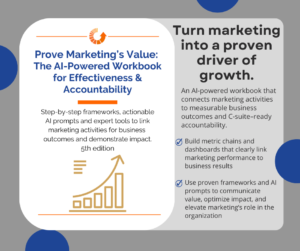
Buy Your Best-Practices Workbook
Think about your company and its products like the corner store in a small town. Whether you are using data to create an online or offline connection, emulate the experience of the local shop where the owner knows your name and important details about things that matter to you. Coming from one of the top 10 largest cities in the country, I recall my surprise upon going with a friend to her hometown farming community during college. Everywhere we went, people knew her name and her family, and could ask her about something particular to them – the latest new foal, their upcoming summer plans, and so on. For a city slicker, it almost felt nosy, but these people genuinely cared. Everyone likes to feel they’re important, that they matter, and that we remember the little things in their life. People want to feel they are more than just a dollar sign.
This means that you need to get to know your customers and prospects before you start pitching them, and that is the value of good data. It can help you learn about your customers’ needs, wants, preferences, buying process, and buying criteria. But here’s the rub: even if you have the data and you know what to pitch, if you haven’t created a connection, the offer will end up in File 13. How you use the data is just as important as the data itself.
Two Vital Tips for Data Usage
- Use the data, but take a courting approach. If you know that someone is interested in process improvement, consider emailing them an article you run across that’s related to their interest or their business, NOT YOURS.
- Share, don’t sell. Content marketing is all the rage. Today we have the data and tools to match content with customer needs and wants and channels with customer preferences. How the content is framed makes a difference—content designed to share and reveal will be better received when establishing the connection than content designed to pitch and sell.
The bottom line. The value of data is in its ability to help you listen. It can be easy to get lost in all the information we can collect, so create opportunities to have encounters and interactions with your customers and prospects, and then use these to truly listen. Sometimes, it helps to step away from the computer and phone and find a way to create a face-to-face meeting. Truly connecting and developing a lasting customer relationship takes time. Data for marketers only serves us well if we can use it to make a connection.
Make your data and connection count. Read our FREE white paper Don’t Waste Your Bullets: Customer Engagement To Accelerate Revenue And Improve Alignment.
FAQ:
A: Personal connection. A Wharton Marketing Conference panel emphasized that relationships—not random tweets and texts—remain the most effective way to engage customers. The core idea: relationship-building is as relevant now as it was a century ago.
A: Connection is the act of linking together. Relationship is reflected in how people behave toward each other over time. Community is a group that shares something in common. Connection enables relationship; relationship can evolve into community.
A: Because behavioral data (downloads, webinar attendance, clicks) can feel “personal,” but it does not automatically create trust or rapport. Knowing facts about someone is not the same as being meaningfully connected to them.
A: Use data to emulate the local shop owner who knows your name and remembers what matters to you. The goal is genuine relevance and care—helping customers feel recognized as people, not treated as transactions.
A: Connect first. Data helps you understand needs, preferences, buying criteria, and process—but without connection, even a well-targeted offer is likely to be ignored.
A:
- Use data, but take a courting approach: If someone cares about process improvement, share an article relevant to their interest—not your pitch.
- Share, don’t sell: Frame content to reveal and help, not to push. “Helpful” earns attention; “salesy” triggers resistance.
A: Data’s value is its ability to help you listen—by creating opportunities for encounters and interactions, then using what you learn to engage with relevance, respect, and timing.
A: Create opportunities for deeper interaction—sometimes stepping away from screens to facilitate face-to-face conversations. Lasting customer relationships take time, and data only serves you well if it helps you make meaningful connections.
Recent Posts
- Focus on Solving Customer Pain Points to Future-Proof Your Company | What’s Your Edge?
- Customer-Centricity in M&A: The Accelerant for Post-Deal Value
- How Strategic Clarity Drives Growth, Profitability, and Customer Value
- Breaking Through Stagnant Growth with a Customer-Centric, Process-Driven Approach | WYE?
- Why Lack of Accountability is Stalling Your Organization’s Growth


You must be logged in to post a comment.