
Service and support make financial contributions to many companies’ revenue. Both are a major customer touch point and impact the future relationship with current customers. More is being expected of support in the form of better service, more efficient delivery channels, increased customer satisfaction and financial performance.
Quantifying the value of the support’s contribution is critical for justifying the resources necessary to maximize the profitability of existing customer relationships. Many organizations are creating and executing a comprehensive service and support plan to create a link between corporate and support operational strategy and address customer expectations. A key part of developing the plan is to establish success factors and key metrics. What are appropriate metrics for service and support?
Studies conducted by the Service Excellence Research Group in cooperation with Supportindustry.com and by eConsultancy have examined key service level metrics.

Below are 5 of the most common metrics used to measure your service and support teams, and some data points that can serve as possible benchmarks.
- Support transaction volume. High-volume support organizations often enjoy significant economies of scale from improvements in efficiency and effectiveness. Half of the companies represented within the study receive between 1,000 and 7,500 live support cases per month with nearly an equal number of transactions handled each month through self-services. Common metrics around support transactions include service level performance, the volume of support requests handled and the use of self-services.
- Support the delivery channel. An eConsultancy study found that phone continues to dominate as the primary support delivery medium, accounting for over half (61%) of all live support requests received, followed quickly by email with live chat growing rapidly. Therefore, hold times and abandonment rates continue to be key metrics. The majority of companies (79.4%) report hold times of less than two minutes. Two-thirds of companies report that talk time for phone support issues range between 5 and 15 minutes. Average talk time rises significantly as the complexity of the product being supported increases. Nearly half of companies report that abandonment rates are below 3%. Service levels for e-mail remain far behind the phone in both responsiveness and timeliness of resolution. Just over half of email cases are acknowledged within 15 minutes. With over a third taking between 15 minutes and 4 hours and about 10 percent taking more than 4 hours, it’s no surprise that e-mail is not viewed as particularly responsive and is declining in popularity.
- Service delivery costs. Another important metric for service and support are cost. Even though many companies have established fees for service and support, phone support costs remain the highest of all mediums with nearly half of closed calls costing more than $25 compared. For phone support, nearly a quarter of calls cost greater than $50 to close, compared to less than 20 percent for e-mail. Considering the higher first contact closure rates and customer preference for phone support, the “real” delivery costs for phone may be superior to other media.
- Self-Service: Nearly two-thirds of customers use self-service before requesting assistance. Measuring the effectiveness of self-services is therefore essential in determining the success of any self-services strategy.
- Customer satisfaction: Customer satisfaction is consistently one of the most important key indicators for a support organization. A highly satisfied customer is extremely valuable because of the greater likelihood of future product purchases, the willingness to be a reference account and the likelihood of renewing maintenance and support contracts. Almost every company questionnaire used some form of customer assessment. Satisfaction surveys vary widely in both breadth and depth. The almost three quarters of companies use a relationship assessment survey approach. Follow-up transaction surveys are used by over half. The top five topics covered in surveys are overall experience, speed of resolution, knowledge of the representative, professionalism of the representative and completeness of resolution.
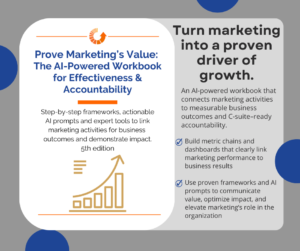
Buy Your Best-Practices Workbook
Three Professional Services Metrics
For many companies, services are a key part of the revenue stream. In the realm of professional services, your people are the service and therefore the product. Research suggests that service businesses find that improving performance is more difficult because customers, activities and deals vary widely. And as we all know, in many instances, services are highly customizable, and that people who deliver the service range in experience, skills, and motivation to the job. Even so, service businesses need to measure and monitor performance in order to identify efficiencies and best practices.
As a professional services firm ourselves, we encourage our colleagues to consider these additional three valuable operationally oriented measures to improve performance: Utilization Rate, Billing Rate, and Variance.
- Utilization rate. The utilization rate is a labor-related metric. It represents the percentage of total labor dollars or hours spent or ‘charged’ to project production. The rule of thumb for the utilization rate for the service delivery personnel is usually around 85%, with the total staff utilization rate of 65% to make a profit. Why worry about utilization rate? Utilization rate is linked to profitability. When you improve utilization, you are moving the profit needle.
- Billing rate. Your billing rate serves as a leading indicators provide directional guidance. For example, when the share of wallet is moving up, your customer equity is improving. On the flip side, when the share of wallet is declining, you can expect your customer equity to also decline. Billing rate reflects the fee per unit of activity charged to customers needed to recover some or all of the costs associated with producing goods or providing services. Billing rate represents the price you can charge for services. Your ability to charge a price premium indicates the perceived value of your offer compared to your competitors. When the market is willing to pay more for your services, it is because they perceive what you have to be of greater value. Pricing is directly related to your organization’s ability to differentiate. For services organizations, differentiation can often be difficult; therefore, Billing Rate provides important insight into the perception of value for your service and your people.
- Variance. The idea behind variance measurement is to identify reducible variances and then take steps toward addressing these variances in order to bring down costs, improve pricing, and enhance service delivery. It’s common to find the level of difference across similar sites and groups within your own organization once you begin a variance-measurement program. This is often due to lack of uniform metrics across business units inside service companies. Once you learn how to measure the variance inherent in your company, you can begin to manage processes to eliminate waste, to improve the delivery of services, to price services more accurately and to write better contracts. Different performance definitions will produce a variance for key metrics. Here’s how to create this measure.
- First begin by comparing yourself against your own performance rather than against poorly defined external measures. Take a comprehensive approach.
- Establish internal benchmarks. Internal benchmarks deliver more detailed metrics, allowing a company to find its own best practices and to see where and how they are achieved. It can then have access to all relevant information to assess differences among business units and accounts.
- Go beyond financial costs to discover and monitor the root causes of all variances.
- Establish uniform metrics for similar activities and guidelines for identifying variances.
- Set up broad measurement systems to report and compare all metrics across the functional silos common to service delivery organizations.
- Institutionalize your measurement and conduct periodic reviews.
- Tie compensation to your metrics.
For this process to be effective and to make meaningful comparisons, you will need to identify the sources of difference in your businesses and devise metrics that meaningfully compare these businesses. Some sources that create differences include variability in service-level agreements, environment, equipment, and infrastructure, and work volume.
By their very nature, the professional services organization must be extraordinarily customer-centric. Every professional services firm or line of business must use customer-focused metrics as key indicators of differentiation.
Are you using these measures to benchmark and audit your capabilities?
Whether a services company or a product company, one of the biggest challenges we all face is being able to identify what must be measured and how to normalize data across different environments. Even when companies know what to measure, they struggle to achieve accuracy. We have found that data are rarely defined or collected uniformly across an organization, and often data collection is driven more by financial reporting than by providing insight into performance. Rather than trying to boil the ocean of data, focus on the measures and metrics and determine what data you need to support these. This way, you can tackle data quality in manageable chunks.
FAQ:
A: Because service and support are major customer touchpoints that directly influence retention, renewals, and future revenue. Quantifying contribution is essential to justify the resources required to improve service levels, channel efficiency, customer satisfaction, and financial performance—and to link support operations to corporate strategy.
A: Research cited highlights five widely used metric categories:
- Support transaction volume
- Support delivery channel performance
- Service delivery costs
- Self-service effectiveness
- Customer satisfaction
A: Metrics typically include service-level performance, total support requests handled, and the share of transactions handled via self-service—because high-volume environments can realize economies of scale when efficiency and effectiveness improve.
A: Key channel metrics include hold time, abandon rate, talk time, responsiveness, and time-to-resolution. Research cited indicates phone remains the dominant live channel, with hold times and abandon rates continuing to be critical indicators; email responsiveness often lags, which can reduce perceived service quality.
A: Because cost-to-serve varies materially by channel and issue type. While phone support often appears most expensive, higher first-contact resolution and customer preference can make the “real” cost-to-outcome competitive. Leaders should monitor cost per closed case by channel, along with resolution quality and repeat-contact rates.
A: Because many customers attempt self-service before contacting support. Measuring self-service effectiveness (usage, deflection rate, success rate, time-to-answer, escalation rate) is essential to validate the strategy and ensure self-service reduces effort rather than creating frustration.
A: Most organizations use some combination of relationship surveys and transactional follow-ups. Common survey topics include overall experience, speed of resolution, representative knowledge, professionalism, and completeness of resolution—because satisfaction is strongly linked to renewal likelihood, future purchases, and referenceability.
A:
- Utilization rate: Percentage of labor hours/dollars charged to project production; strongly linked to profitability.
- Billing rate: The fee per unit of activity; a practical indicator of perceived value and differentiation (pricing power).
- Variance: Measures performance differences across teams/sites/units to identify reducible variance, eliminate waste, improve delivery, price more accurately, and strengthen contracts.
A: Start by benchmarking against your own internal performance, establish internal benchmarks to surface best practices, go beyond financials to diagnose root causes, define uniform metrics for comparable activities, implement cross-silo reporting, institutionalize periodic reviews, and tie incentives to the measures. This approach improves normalization and data quality in manageable increments.
Recent Posts
- Focus on Solving Customer Pain Points to Future-Proof Your Company | What’s Your Edge?
- Customer-Centricity in M&A: The Accelerant for Post-Deal Value
- How Strategic Clarity Drives Growth, Profitability, and Customer Value
- Breaking Through Stagnant Growth with a Customer-Centric, Process-Driven Approach | WYE?
- Why Lack of Accountability is Stalling Your Organization’s Growth


You must be logged in to post a comment.