
Using real examples from our work each episode of One Good Idea provides a smart business tip to help you grow. This episode is based on work with a B2B customer who was looking to expand their business. In our conversation with the president of the company, we discussed employing a niche strategy as a way to achieve organic growth.
What is are niche markets? Niches are segments of a larger market that have own unique needs, preferences, or that makes it different from the market at large. For example, ice cream for vegans or virtual assistant chat bots for CEOs.
Companies pursing niches, need strategies that organize a product, associated content, and offers around this specific specialized segment. Pursuing a niche requires you to examine your existing or potential customers and delve deep into the data to identify something that makes them unique or identifying a unique unmet need.
Then it is vital to use this information to decide how to meet that need. Once you have this, the key is to select and implement a market strategy to engage with and acquire customers in this segment.
What You Need to Consider When it Comes to Niches
The beauty of niches is that create opportunities for growth. The first critical consideration is to determine whether there are enough potential customers in the niche to warrant a unique strategy.
Let’s use our ice cream example. Who would have thought there would be a need for vegan ice cream 20 years ago! Today there are at least a dozen places you can get vegan ice cream right here in Austin. That certainly indicates there is a niche market with a need.
The idea of niches applies nicely to the B2B technology customer who was successful in several verticals, such as healthcare. They had many healthcare customers, but they looked at these customers as one homogeneous group. There were however a number of niches inside this vertical that provide opportunities to expand.
If your company has a vertical industry focus, it is often helpful to dive deeper into the vertical and looking for niches can provide a good growth strategy as long as your solution is a good fit and truly meets the need. This is the second critical consideration.
This requires your organization to be a very customer-centric vs. product-centric technology company.
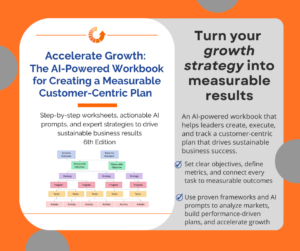
Buy Your Best-Practices Workbook
Take 3 Initial Steps Before You Deploy a Niche Strategy
If you are a customer-centric organization and you think tapping niches might enable you to expand take these three initial steps:
- See if you can parse your segment into micro clusters or niches.
- Determine how many customers you have in this group and the potential number of customers in this niche.
- Decide what if anything you would need to modify in your solution to capture more of these customers.
Did a niche strategy make sense for the customer we’re were talking with? Yes. They were strong in

 Take three steps to tackle niche marketing
a couple of niches and there were plenty of more potential customers with the same need. The beauty of niches is that you already know a great deal about the customer and solution. It is the nuances and distinctions that provide the opportunity.
With this clarity, we could craft strategies and tactics specific to the niches. This didn’t require making modifications to their solution, but it required modifying the positioning, website, and content. Calling out the niche was an integral part of the decision, like calling out ice cream for vegans.
Branding will become a key part of the strategy.
If you decide a niche strategy is right for you, you can see lots of examples that will help with your approach. The hotel industry helps illustrate this idea. Look at all the properties owned by a hotel company for example, each brand intended for a different niche/need, each with its own Marketing strategy and tactics, including website pages, content, etc. This is an important point.
We’ll leave you with this One Good Idea. If you have traction in a segment, consider how you might go deeper and tap niches for growth. Of course, smart business leaders know that this course of action requires developing a strategy and plan specific to the niche.
You’re only 30 minutes away from One Good Idea. Here’s how to get your Free One Good Idea.
FAQ:
A1: A niche is a specialized segment within a larger market that has distinct needs, preferences, or unmet requirements. Niche strategies can accelerate organic growth because they allow you to concentrate your product, positioning, content, and offers around a clearly defined audience—making it easier to be relevant, differentiated, and chosen.
A2: It requires a customer-centric approach: examining existing and potential customers, digging into the data to identify what makes a group unique, and determining the specific unmet need you can serve better than alternatives. Once defined, you then select and execute a go-to-market strategy tailored to that niche.
A3:
- Market viability: Are there enough potential customers in the niche to justify a dedicated strategy?
- Solution fit: Does your solution genuinely meet the niche’s needs, and can you deliver value in a way that is meaningfully distinct?
A4: Vertical markets often contain multiple niches. A company may believe it “serves healthcare,” for example, but healthcare is not one homogeneous buyer group. Going deeper within a vertical can reveal micro-segments with shared needs—creating opportunities to expand without abandoning the vertical focus.
A5:
- Parse your existing segment into micro-clusters or niches.
- Quantify how many customers you have in the niche and the potential market size.
- Decide what—if anything—you must modify in the solution to win more of that niche.
A6: Not necessarily. Often the biggest changes are in positioning, website structure, and content, including explicitly “calling out” the niche in your messaging. Branding and clarity become central because the niche must immediately recognize, “This is built for me.”
A7: If you already have traction in a segment, consider going deeper to identify and serve niches for growth—but do it deliberately, with a niche-specific strategy and plan rather than generic marketing scaled down.
Recent Posts
- Focus on Solving Customer Pain Points to Future-Proof Your Company | What’s Your Edge?
- Customer-Centricity in M&A: The Accelerant for Post-Deal Value
- How Strategic Clarity Drives Growth, Profitability, and Customer Value
- Breaking Through Stagnant Growth with a Customer-Centric, Process-Driven Approach | WYE?
- Why Lack of Accountability is Stalling Your Organization’s Growth


Leave a Reply
You must be logged in to post a comment.