
Numerous times throughout the year, we’re presented with opportunities to watch family and friends’ videos and listen to stories. At a recent gathering, we laughed together as we watched the video of one of the toddlers enjoying a peanut butter and jelly sandwich and the shock on his face when the family dog grabbed what was left and devoured it; we cheered in unison while we watched the video of one cousin cross the finish line of her first marathon; and we shared tears as we watched the goodbye video from a loved one who waged the battle against cancer and lost. What makes these shared stories so compelling? It is our ability to feel other people’s pain and pleasure – captured in the word we know as empathy.
Empathy is the ability to understand and share the feelings of another, and it stems from a collective of what is known as mirror neurons. These mirror neurons enable us to literally ‘feel’ someone else’s pleasure or pain. When you see someone performing an action and you can imagine yourself taking it as well, your mirror neurons are firing.

Dr. Uri Hasson, as associate professor of psychology at Princeton University, found that when you’re listening to an engaging story, the response patterns in your brain become “markedly similar” to those of the storyteller. In fact, neurologists have found that our brains make little distinction between an experience we are reading about and one that is actually happening. Dr. Uri Hasson suggests, “communication is one act, in which the brain of the communicator, and the brain of the listeners are trying to be coupled, and merging as one.”
Empathy is at the heart of human relationships, and human relationships are at the heart of Marketing. Francis Buttle in his 1996 book, Relationship Marketing: Theory and Practice, declared that “Marketing is no longer simply about developing, selling, and delivering products. It is progressively more concerned with the development and maintenance of mutually satisfying long-term relationships with customers.”

Hence the emphasis on customer retention, customer lifetime value, and customer experience. A Nielsen study found that people want a more personal connection in the way they gather information. With the myriad of choices and options for nearly every purchase, it is essential that marketers court, engage, and build a relationship with customers.
When you can genuinely use empathy, you are more likely to engage the target audience in your content, your message, and your story. In fact, Hudson Nkwakanma (Florida A&M University), Annette Jackson (South Carolina State University), and Janee Burkhalter (Georgia State University) identified four key factors of success in Relationship Marketing in their article Relationship Marketing: An Important Tool For Success In The Marketplace: Those four factors are: trust, commitment, empathy, and responsiveness to customers’ needs. Empathy is essential for both creating the initial connection and maintaining the long-term relationship.
How do you successfully use empathy in Marketing? First, as a marketer, you need to understand the feelings and needs of your customers. This is a key part of being customer-centric. Then use storytelling as a powerful entry point for engaging customers’ empathy.
Customer-Centricity
What do we mean by customer centricity? We define customer centricity as “looking at the world through the eyes of the customer, what they want from you, what they expect from you, and what they can count on from you.” Do you notice the relationship between the concept of empathy and the idea of looking at the world through the eyes of your customer? You have to have empathy to be able to incorporate empathy into your Marketing.
Understanding Customers’ Needs and Wants
There is a difference between a need and a want, and you need to know both. A want is a desire, a wish. A need is a necessity. For example, I want chocolate (it’s a want even though I may think otherwise), but I need food to survive. At the most basic level you need to understand your customers’ functional and emotional needs. Functional needs are what your product or service does for your customers and the problem it solves. Emotional needs are what your customers need to feel when they use your product. Do they feel safer? More confident? Smarter? Armed with the emotional needs and your customers’ wishes and desires, you have the ingredients to weave empathy into your Marketing.
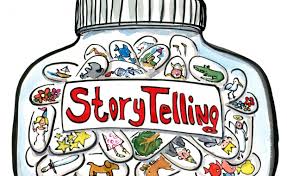

Empathy in Storytelling
Storytelling is a powerful tool for creating shared meaning. It can serve as a valuable tool in business to boost results and improve relationships. Researcher Paul Zak found that stories change our behavior by literally changing our brain chemistry.
Storytelling provides a way to explain a series of events. The events can be real, for example, as a recent experience at the local post office that I relayed to a friend, or fictional as in the fairy tale I read to a young child at the library. Marketers can
use storytelling to illustrate difficult concepts, to drive home important points or to create a predisposition to purchase. The key to successful storytelling in Marketing is to visualize the story through your customer’s eyes. Your story should relate to where the customer is in their buying process, the problem they need to solve, and the role they play. To create stories that are relevant to your customers’ needs, issues, and requirements, you need empathy.
Incorporating empathy into your “storytelling” has more value than just customer engagement. Empathy has financial implications. Empathy is a key ingredient to creating a lasting relationship. Longer associations between your company and your customer are generally more profitable, which is why we care about customer tenure as a metric. These customers are also more likely to be loyal and participate in cross-selling, which increases overall sales volume and potential profit, and they are also more likely to make referrals, which helps to lower customer acquisition costs.
And here’s the best part of all. People crave stories. According to a study by OneSpot, a content marketing platform, Americans consume more than 100,000 digital words every day, and 92% of these people want to internalize those words in the form of a story. So take a customer-centric approach and use your empathy to craft stories that will resonate with your customers.
FAQ:
A: Stories are compelling because they activate empathy: our ability to feel another person’s pain or pleasure. Empathy is central to human relationships, and human relationships are central to Marketing—especially in a world where retention, lifetime value, and customer experience determine long-term growth.
A: Empathy is the ability to understand and share the feelings of another. It is associated with mirror neurons, which help us “feel” what others feel. In practical terms, empathy is what makes messages land—because people respond to meaning, not just information.
A: Research cited suggests that when people listen to an engaging story, their brain activity patterns become more similar to the storyteller’s—creating a form of “coupling.” In other words, stories help audiences experience the message, not just process it.
A: Relationship marketing emphasizes building and maintaining mutually satisfying long-term customer relationships. Research cited identifies four success factors—trust, commitment, empathy, and responsiveness—making empathy essential for both initiating connection and sustaining it over time.
A: Customer centricity is “looking at the world through the eyes of the customer—what they want, what they expect, and what they can count on.” You cannot do this without empathy, because empathy is the mechanism that enables you to understand the customer’s perspective and priorities.
A: A want is a desire; a need is a necessity. Effective empathy-driven Marketing requires understanding both functional needs (what the product does and the problem it solves) and emotional needs (how the customer needs to feel—safer, smarter, more confident). Emotional needs are often the bridge to resonance and preference.
A: Visualize the story through the customer’s eyes. Align the story to where the customer is in the buying process, the problem they are trying to solve, and the role they play. Stories can clarify complex ideas, reinforce key points, and create predisposition to purchase—when they are grounded in customer reality.
A: Empathy strengthens relationships, and longer customer tenure is generally more profitable. Empathy can increase loyalty and cross-sell participation, improve referrals (reducing acquisition cost), and support customer experience—making empathy not only a communication tool, but a profitability lever.
Recent Posts
- Focus on Solving Customer Pain Points to Future-Proof Your Company | What’s Your Edge?
- Customer-Centricity in M&A: The Accelerant for Post-Deal Value
- How Strategic Clarity Drives Growth, Profitability, and Customer Value
- Breaking Through Stagnant Growth with a Customer-Centric, Process-Driven Approach | WYE?
- Why Lack of Accountability is Stalling Your Organization’s Growth


You must be logged in to post a comment.