
Podcast: Play in new window | Download (Duration: 5:20 — 3.7MB) | Embed

Companies and marketers have invested heavily in becoming very proficient at downstream marketing – email marketing, SEO, landing pages, events, content, and so on. And without a doubt, downstream requires solid skills. Imagine, however, that you’re a good competitive runner – you’ve worked hard on your pace, improving your stride and addressing your form. Come the day of an off-track race, it will all be for naught if you head in the wrong direction or make a wrong turn. This is the power and value of the upstream.
Define Your Strategy
Upstream marketing serves as the strategic process of identifying & fulfilling customer needs. Good competitive racers check out the course in advance to get a sense of the terrain, curves, and turns. They may even run it. I know I usually do. These runners invest in creating a competitive advantage. Competitive runners also know which races are best suited to them, for example, are they better at hill or flatland running. In the business world, we’re always looking for how we can create a competitive advantage based on the value we deliver and the value customers require. This type of thinking and planning falls into the realm of the upstream.
Upstream entails any work around defining your strategy, value proposition, and positioning, directing the innovation process for long-term sustainable growth, developing segments, and analyzing how customers use a product or service.
All programs you design and execute to bring your strategy to life, whether through tailored personalized account based marketing and/or outbound and inbound lead generation, that include tactics such advertising, promotion, SEO, brand building, event, influencer marketing, content marketing, social marketing are in the downstream. If you don’t get the upstream right, the downstream will be polluted.

Create Demand by Focusing on the Upstream
When you are working on creating Demand with a Capital D, you need to focus on the Upstream. When you’re working on creating demand as leadgen and account based marketing, you are in the downstream. Of course, the upstream and downstream complement one another. You may have some advantages by being familiar with a course before you run it, but to win, you still need to be a good runner.
While Upstream defines your company’s value proposition, Downstream supports your company’s value proposition. Upstream directs your innovation process to ensure long-term sustainable growth. Downstream delivers programs to support the adoption of your products NOW. Data and analytics are needed in both. In the upstream, you need customer insights, competitive intelligence, and data to support creating segmentation, personas, and customer journey models. In the downstream, you use your data and analysis to address activities, touchpoints, and channels.
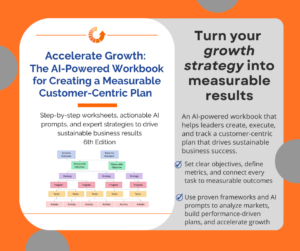
Buy Your Best-Practices Workbook
Upstream and downstream answer different questions because they drive different but complementary decisions. You will need measures and metrics for both as well. Category ownership, Customer lifetime value, Share of wallet are measures that indicate how well you tackled the upstream. Measures associated with engagement, influence and pipeline inform your downstream success.
Like competitive runners who consistently win, you need to leverage both the upstream and the downstream. High performing organizations invest in excelling at both. Let’s talk about how you can become more proficient at the upstream and the downstream.
FAQ:
A1: Because downstream excellence can still fail if it is pointed in the wrong direction. Like a competitive runner with great pace and form, you can execute flawlessly and still lose if you take a wrong turn. Downstream tactics (email, SEO, content, events, landing pages, etc.) require skill, but they cannot compensate for weak strategy, positioning, or target-market choices.
A2: Upstream marketing is the strategic process of identifying and fulfilling customer needs. It includes defining strategy, value proposition, and positioning; directing innovation for long-term sustainable growth; developing segments; and analyzing how customers use a product or service. Upstream is where you decide where to play and how to win.
A3: Downstream marketing is the set of programs and tactics used to bring strategy to life and drive near-term adoption—such as ABM, outbound and inbound lead generation, advertising, promotion, SEO, brand building, events, influencer marketing, content marketing, and social marketing.
A4: Because downstream execution amplifies whatever upstream decisions you made. If segmentation, positioning, or value proposition are unclear or misaligned to customer needs, downstream programs will generate noise, low-quality demand, and inefficient conversion—even if the tactics are well executed.
A5: Demand (capital D) is created through upstream work that shapes preference and strategic advantage—making customers want your solution. Demand (lowercase d) is downstream execution that captures and converts interest through leadgen and ABM. Both are necessary, but they solve different problems.
A6: Both require data, but for different decisions. Upstream relies on customer insights, competitive intelligence, segmentation, persona development, and journey models. Downstream uses data to optimize activities, touchpoints, channels, engagement, and conversion performance.
A7: Upstream success is reflected in measures such as category ownership, customer lifetime value, and share of wallet. Downstream success is reflected in engagement, influence, and pipeline measures. High-performing organizations invest in both sets because they are complementary.
Recent Posts
- Focus on Solving Customer Pain Points to Future-Proof Your Company | What’s Your Edge?
- Customer-Centricity in M&A: The Accelerant for Post-Deal Value
- How Strategic Clarity Drives Growth, Profitability, and Customer Value
- Breaking Through Stagnant Growth with a Customer-Centric, Process-Driven Approach | WYE?
- Why Lack of Accountability is Stalling Your Organization’s Growth


Leave a Reply
You must be logged in to post a comment.