
Most of us would agree that operating blind could be a fatal mistake. Yet, many companies are doing just that when they function without customer insights. Whether you’re focused on customer retention or acquisition, customer input is a key ingredient to making fact-based decisions. A study by OnBrand and Bynder of more than 500 companies all with at least 500 employees found that all things customer are at the top of the priority list. This includes customer experience, new customer acquisition, customer retention/loyalty and engagement.
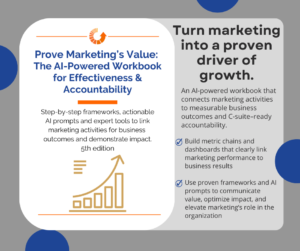
Buy Your Best-Practices Workbook
You Need Customer Insights for Both Sides of the Equation

 Gather customer insights for both the acquisition and retention sides of equation.
Clearly we are in what Forrester calls “The Age of the Customer.” In this type of environment operating on gut or intuition isn’t smart. Smart companies and marketers know it is imperative to collect and analyze customer feedback and to use this feedback to build better customer experiences and relationships. If it’s been awhile since you conducted any customer research now may the time. The insights gained from this endeavor can help you determine what is necessary to find and keep a customer and increase loyalty. Both customer retention and loyalty are excellent metrics of a company’s health and two measures every Marketing organization should track and report.
It’s imperative that companies focus on the both the find and keep part of the customer equation. On the acquisition side of the equation, most marketers track cost and rate of acquisition. However, another key measure every marketer should be monitoring is the win/loss ratio. This is a key measurement, yet studies reveal that less than 20% of organizations conduct a post-decision interview (PDI). This win/loss analysis is too important to gloss over. Properly conducted PDI’s should uncover more than why a competitive opportunity was won or lost. when done well, win/loss analysis provide the insights necessary to keep your organization’s market and sales strategies aligned with your prospect’s perceptions. PDIs can help validate market perception, and market perception can diagnose performance and positioning issues. PDIs enables you to verify your competitive differentiation. Avoid having your Sales team conduct PDIs. If you do not know how to structure a PDI instrument or conduct PDIs secure the help of experts.
 PDIs and Win/loss anlaysis are central to your customer intelligence management practices. Customer intelligence empowers your organizations to more profitably define, identify, and respond to high value customers. The Aberdeen report, Customer Intelligence Management: Converting Data to Profits, suggests that companies that exemplify best-in-class practices attained a 20%+ annual improvement in gross revenues and customer acquisition and retention rates. Therefore, investing in customer intelligence and integrating customer intelligence tools with you CRM systems makes good business sense. The study identified the following best practices:
- Establish cross-functional teams and ownership processes to align IT with line of business users;
- Take a long-term approach to growth by defining customer value by lifetime value models
- Manage customer intelligence at the corporate level.
- Utilize operational BI (business intelligence) and predictive analytics to better respond to high value customers.
- Use customer data integration and data quality solutions to incorporate multi-sourced data prior to analysis.
We strongly encourage every Marketing budget include gathering, analyzing and using customer and prospect data an above-the-line priority. Check to make sure your budget has this line item.
FAQ:
A: Operating without customer insights is akin to operating blind. Customer feedback and data are crucial for making fact-based decisions that improve acquisition, retention, loyalty, and overall customer experience.
A: Insights are needed on both sides of the equation—acquisition (finding new customers) and retention (keeping and growing existing customers). Both are vital metrics of company health and should be rigorously tracked and reported.
A: Win/loss analysis uncovers why opportunities are won or lost, validating market perception and competitive differentiation. PDIs provide actionable insights to align market and sales strategies with customer perceptions, helping diagnose performance and positioning issues.
A: Sales teams should not conduct PDIs due to potential bias. Structured PDIs require expertise to design instruments and conduct interviews effectively—engage experts if needed.
A:
- Establish cross-functional teams aligning IT and business users.
- Adopt long-term growth approaches using customer lifetime value models.
- Manage customer intelligence at the corporate level.
- Leverage operational BI and predictive analytics for high-value customer response.
- Integrate multi-source customer data with quality controls before analysis.
A: Best-in-class companies investing in customer intelligence see significant improvements in revenues, acquisition, and retention. Including customer data gathering and analysis as a core budget item is essential for sustained growth.
A: VisionEdge Marketing offers advisory services to develop customer insight programs, integrate intelligence tools with CRM systems, and implement best practices for data-driven growth.
FAQ:
A: Operating without customer insights is akin to operating blind. Customer feedback and data are crucial for making fact-based decisions that improve acquisition, retention, loyalty, and overall customer experience.
A: Insights are needed on both sides of the equation—acquisition (finding new customers) and retention (keeping and growing existing customers). Both are vital metrics of company health and should be rigorously tracked and reported.
A: Win/loss analysis uncovers why opportunities are won or lost, validating market perception and competitive differentiation. PDIs provide actionable insights to align market and sales strategies with customer perceptions, helping diagnose performance and positioning issues.
A: Sales teams should not conduct PDIs due to potential bias. Structured PDIs require expertise to design instruments and conduct interviews effectively—engage experts if needed.
A:
- Establish cross-functional teams aligning IT and business users.
- Adopt long-term growth approaches using customer lifetime value models.
- Manage customer intelligence at the corporate level.
- Leverage operational BI and predictive analytics for high-value customer response.
- Integrate multi-source customer data with quality controls before analysis.
A: Best-in-class companies investing in customer intelligence see significant improvements in revenues, acquisition, and retention. Including customer data gathering and analysis as a core budget item is essential for sustained growth.
A: VisionEdge Marketing offers advisory services to develop customer insight programs, integrate intelligence tools with CRM systems, and implement best practices for data-driven growth.
Recent Posts
- Focus on Solving Customer Pain Points to Future-Proof Your Company | What’s Your Edge?
- Customer-Centricity in M&A: The Accelerant for Post-Deal Value
- How Strategic Clarity Drives Growth, Profitability, and Customer Value
- Breaking Through Stagnant Growth with a Customer-Centric, Process-Driven Approach | WYE?
- Why Lack of Accountability is Stalling Your Organization’s Growth


You must be logged in to post a comment.