
Podcast: Play in new window | Download (Duration: 8:19 — 11.4MB) | Embed
 There’s nothing more comfortable than something that fits perfectly. Whether it is great fitting shoe. A right fit job. Or the right fitting customer. Finding customers, acquiring customers, and retaining right fit customers is the focus on this episode of What’s Your Edge.
A right fitting customer is essential to realizing customer lifetime value – an excellent KPI for every organization. This means you need to know what constitutes a right fit customer. Because the clearer you are on what a right fit customer is for your business, the more successful you will be at customer acquisition, retention and advocacy.
Here are three well-accepted statistics about finding, keeping and growing the right customers:
- Businesses miss out on $1.6 trillion from losing customers to a competitor.
- It costs 16 times more to build a long-term relationship with a new customer, compared to keeping an existing customer.
- Acquiring new customers costs 5 times as much as retaining existing ones.
There’s more than comfort at stake when something doesn’t fit well. Poor fitting shoes are not only uncomfortable but they can cause bodily damage ranging from blisters, ingrown toenails and bunions or something worse.
And there are serious downsides when a company invests in acquiring and retaining ill-fitting customers. Like poor fitting shoes, they can hurt your business with poor reviews, high service costs, internal fatigue, and cost you other better opportunities. And like poor fitting shoes that end up taking space on a shelf, passed over time and again for a more comfortable pair, companies tend to avoid poor fitting customers.
For many B2B industries the cost to acquire a new customer is in the hundreds of dollars. Therefore, it is good business to focus on the right fit customers. There are many upsides to having right fitting customers. They become staunch advocates, tend to be loyal in the face of competition, are the first to adopt your new products, etc.
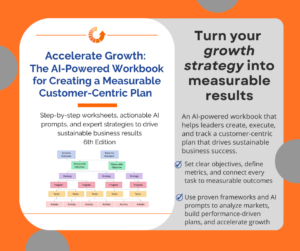
Buy Your Best-Practices Workbook
How to Find, Acquire and Retain Customers that Fit
You agree. Wonderful. Then the next step is to know what represents a right fit customer and how to acquire and retain them. Use these 7 steps to help.
- Clarify what makes a right fit. Before you select a shoe, you determine what size you need and other important fitting parameters, such as what kind of arch support is required. The same applies for selecting customers. You need to know what industry, size, location and other factors will assure a proper fit. Establish 5-7 very specific criteria that indicate whether a company is or will be a good fit. It will depend on your organization, your market, and your offer.

- Nail the Why. Shoes can look very similar. Athletic shoes often look alike and serve the same function. Yet, all athletic shoes are not the same. Some are designed for the trails, others for road and track. Some are designed for flexibility, others for high impact. The same applies to customers. It may seem that anyone willing to buy is a good fit. This is a very opportunistic approach. And sometimes like a new shoe it turns out to be a good fit. But it’s definitely not a good fit to buy a dress shoe if what you need is a hiking boot. Be clear about why customers want/need your offer, why your offer and your company are better than the alternatives. Write a succinct customer value proposition and positioning statement that clearly expresses who are your best fitting customers and why they need/want your offer.
- Frame up your message map. Your message map is what brings your value proposition, positioning and differentiation to life. It guides content development, website navigation, customer conversations, and more. A quality message map ensures consistent messaging across your organization and across channels and touchpoints, supports your customer-facing teams and prevents them from being ambushed when they engage with prospects and existing customers. It is a powerful competitive tool.
- Develop your acquisition plan. Now that you’re armed with what comprises a right fitting customer, a clear value proposition and positioning platform, and a message map, it’s time to make your customer acquisition plan. Make sure your plan accounts for the customer buying journey regression of actions, activities, and the state of mind a customer goes through over a defined period of time in their relationship with your organization. Remember to include performance targets as well as a cost to acquire. If you haven’t mapped your customers’ journey and developed associated personas, take this step. If you aren’t sure how much you are willing to invest to acquire a customer, use a benchmark. Or work backwards. One approach is to identify all the costs (Marketing, Sales, people and expenses). Then divide this total by the number of new customers you expect to acquire (that is your customer acquisition performance target). This will give you a general target for your cost to acquire.
- Match internal processes to how your customer buy. We’ve found that many organizations define their Marketing and Sales processes to support what these functions need to do to deliver the acquisition plan and how these organizations align and work with each other. Our recommendation is to start with the customer journey and synchronize your Marketing and Sales processes to it. This will encourage an outside-in view rather than an inside-out view.
- Screen prospective customers sooner. It’s expensive to keep buying shoes that don’t fit. That’s why we’re encouraged to try them on and walk in them. We often think that we can make a poor fitting shoe work if we just break them in. Good salespeople advise against buying shoes that don’t feel right when you try them. Apply the same thinking to prospective customers. Craft 2-3 initial conversation questions to screen out unqualified customer candidates as quickly as possible. Use demos, trials, and discovery sessions as ways for you and your prospects to ascertain fit.
- Create a customer-centric culture. Customer-centricity entails placing the customer at the center of your business operating model where all aspects of the business are informed by, or designed to meet the needs of, the customer (the WHY). Implement activities, systems, processes, and touchpoints that will facilitate right fitting customers’ ability to have positive interactions and experiences with your organization. Address the entire customer lifecycle to support building a long-term relationship and positive customer experience.

When you have a perfectly fitting shoe, it’s #smartbusiness to take good care of it so it will last a long time. The same applies to right fit customers. Make the investment in bringing on people with a customer focus and empowering them to make business decisions that will have the greatest positive impact on finding, retaining and growing the value of your customers.
We hope you found this episode of What’s Your Edge? Helpful. What’s Your Edge? is the creation of VisionEdge Marketing. VisionEdge Marketing, founded in 1999, helps our customers solve the most difficult problems when it comes to using data, analytics, process and measurement to accelerate growth, create customer value, and improve performance. We always welcome hearing from you.
FAQ:
A1: A right fit customer is a customer whose needs, expectations, and operating context align with your offer and your ability to deliver value. Right fit customers are essential to customer lifetime value (CLV) because the clearer you are about fit, the more effective you will be at acquisition, retention, expansion, and advocacy.
A2: Ill-fitting customers can damage performance the way ill-fitting shoes damage your feet—through friction and long-term harm. They often lead to poor reviews, high service costs, internal fatigue, and opportunity cost (time and resources diverted from better-fit customers). Over time, organizations tend to avoid these accounts, which undermines retention and growth.
A3: Because customer economics favor it. Well-accepted research consistently shows that acquiring new customers is materially more expensive than retaining existing ones, and losing customers to competitors represents significant missed value. Right fit customers also tend to be more loyal, more willing to advocate, and more likely to adopt new offerings early.
A4: Use a disciplined, customer-centric approach built on these seven steps:
- Clarify what makes a right fit. Define 5–7 specific criteria (e.g., industry, size, location, operating model, use case, readiness) that indicate strong fit.
- Nail the “why.” Create a succinct value proposition and positioning statement that clarifies who your best-fit customers are and why they choose you over alternatives.
- Frame up your message map. Translate positioning into a message map that guides content, website navigation, and customer conversations—ensuring consistency across touchpoints and teams.
- Develop your acquisition plan. Build a plan aligned to the buying journey, with performance targets and a defined cost-to-acquire (use benchmarks or work backwards from total acquisition costs divided by expected new customers).
- Match internal processes to how customers buy. Start with the customer journey and synchronize Marketing and Sales processes to it—avoiding an inside-out process design.
- Screen prospective customers sooner. Use 2–3 early screening questions and structured discovery (demos, trials, discovery sessions) to quickly determine fit and avoid expensive pursuit of poor-fit prospects.
- Create a customer-centric culture. Embed customer needs into the operating model, supported by processes, systems, and touchpoints across the full lifecycle to enable positive experiences and long-term relationships.
A5: Fit drives value. The better you define and protect “right fit,” the more efficient your acquisition becomes and the more durable your retention, advocacy, and lifetime value will be. Just as you care for a perfectly fitting shoe to extend its life, you should invest in the people, processes, and empowerment needed to retain and grow right-fit customers.
Recent Posts
- Focus on Solving Customer Pain Points to Future-Proof Your Company | What’s Your Edge?
- Customer-Centricity in M&A: The Accelerant for Post-Deal Value
- How Strategic Clarity Drives Growth, Profitability, and Customer Value
- Breaking Through Stagnant Growth with a Customer-Centric, Process-Driven Approach | WYE?
- Why Lack of Accountability is Stalling Your Organization’s Growth


Leave a Reply
You must be logged in to post a comment.