
Various studies report that marketers face challenges when it comes to building customer loyalty and improving market share. Avoidable customer churn costs US businesses over $100 billion a year. Customers defect even when they report they are satisfied. The proportion of customers who switch companies for any reason continues to rise. In fact, there is phenomenon of customers known as serial switchers. Customers who switch entirely to another provider as well as those who continued to do business with their current provider but added services from another provider – a new, but growing trend. Customer loyalty is so fleeting, Accenture created the label of the “Switching Economy.” Understanding why cusotmer switch and what you can do is essential to stem customer defection.

Stave off Defection
All the investment in acquiring customers is wasted if they are only end up walking out the door shortly thereafter. To stem the tide of customer defection, companies must better understand what really keeps their customers engaged. There are a number of overlooked, but critical points of interaction in the customer relationship every company needs to address. Before you can fix a problem you need to know how big it is. At a minimum you need to know at what point you determine a customer has left or defected. Use that point in time to determine your current customer retention and/or defection rate. Evaluate how this rate compares to the rate for your industry and for best in class companies. Calculate the profit you are losing due to defection.
Then, identify the causes of customer attrition. Most likely this will require conducting customer research. We recommend you use a third party to interview customers who defect. Some general rules of thumb that have emerged over the years is that more than 50% of customers are lost due to poor service, something every company can improve. Another 15% shift because of new / better products being launched and another 15% shift because they can buy the product less expensively from somewhere else. Determine what it would take to address the reasons and the associated costs for both fixing the problems and trying to win back the customers.
There are three blind spots companies often overlook that every organization can improve:
- Channel preference. Customers today use a variety of channels to access information and make buying decisions. It’s imperative today to understand your customers channel preferences. For many companies, this will require you to create and manage a multi-channel experience. One key step every company can take is to map the customer experience.
- Watch for signs of switching. Companies often overlook signs that customers are itching to switch. There is a rise in the rate of what is known as partial switching. This is when a customers keeps some services or products with their current provider but adds another provider or providers to their stable who often offers your product or something similar that solves the problem your company addresses. Partial switching opens the door for your competition and creates risk. It’s imperative to regularly monitor customer behavior and feedback.
- Keep promises. Companies are failing to keep promises they make on the service experience. Customers cite “having the service experience match the promise a company makes to me up front” as one of the most important areas of customer service. Yet the greatest service frustration cited is a provider’s failure to deliver on the service experience promised up front.
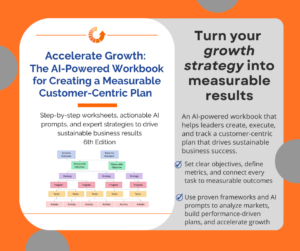
Buy Your Best-Practices Workbook
Tackling these three areas will requires a solid foundation in data, analytics and research, particularly voice of customer research, in order to identify and respond to rapid changes in customer behavior to increase customer loyalty. Tap the help of experts to harness the power and value of customer analytics. Data-derived customers insights help identify the key moments of change, as well as competitive threats, service opportunities, and position the company to more effectively deliver on its brand promise.
FAQ:
A: Avoidable churn costs U.S. businesses over $100B annually. Customers defect even when they report satisfaction, and switching behavior continues to rise—including “serial switchers.”
A: Accenture’s label for today’s environment where loyalty is fleeting and customers switch providers readily—either fully or through partial switching (adding another provider while keeping the current one).
A: Define the point at which a customer is considered “defected,” then calculate your retention/defection rate, benchmark it against your industry and best-in-class, and quantify profit lost due to churn.
A: Conduct customer research—ideally using a third party to interview defected customers for objectivity and higher-quality insight.
A: Often cited: >50% due to poor service, ~15% due to better/new products, and ~15% due to lower price elsewhere. Validate these drivers with your own data and interviews.
A: (1) Not understanding channel preference, (2) missing early signs of switching (especially partial switching), and (3) failing to keep service promises made up front.
A: When customers keep some business with you but add a competitor for similar services. It creates an open door for competitors and increases churn risk—so behavior monitoring is essential.
A: A foundation in data, analytics, and research—especially Voice of Customer—so you can detect behavior changes, identify competitive threats and service gaps, and consistently deliver on your brand promise.
Recent Posts
- Focus on Solving Customer Pain Points to Future-Proof Your Company | What’s Your Edge?
- Customer-Centricity in M&A: The Accelerant for Post-Deal Value
- How Strategic Clarity Drives Growth, Profitability, and Customer Value
- Breaking Through Stagnant Growth with a Customer-Centric, Process-Driven Approach | WYE?
- Why Lack of Accountability is Stalling Your Organization’s Growth


You must be logged in to post a comment.