
Logic and math are two essential accountability skills. Both are integral to performance management for every part of your organization. If you have ever worked a Sudoku puzzle you understand the difference between logic and math. While most Sudoku puzzles use numbers in the boxes, the numbers are irrelevant. Solving the puzzle requires a form of logic known as deductive reasoning.
What is logic and how are logic and math related? Logic is the systematic study of valid rules of inference. Logic clarifies. Math quantifies. Math provides accurate numerical results. It does not require you to understand cause and effect.
Most of us encounter logic in the math curriculum. Many math textbooks include a logic section, often primarily focused on symbolic logic. Truth tables and Venn diagrams also fall into the realm of logic.
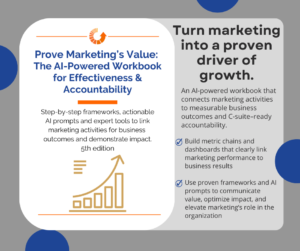
Buy Your Best-Practices Workbook
When it Comes to Accountability Is Logic More Important Than Math?
Logic supports analysis and requires reasoning. Two types of reasoning are helpful for this discussion: deductive and inductive.

Deductive reasoning is the form of reasoning most closely connected to logic. It concerns the logical consequence of given premises. Deductive reasoning starts with a hypothesis that examines facts and then reaches a logical conclusion. For deductive reasoning to work, the hypothesis must be correct.
Here’s an example of the deduction concept: “If the first then the second, and if the second then the third, then, if the first then the third.” Or If A=B, and B=C, then A=C. In everyday terms it might go like this.
A = Berries have the highest antioxidant activity of commonly consumed fruits.
B = Antioxidants protect your cells against free radicals which may play a role in heart disease, cancer, and other diseases.
Then: Berries protect your cells against free radicals.
(Hence the enormous surge in berry-based supplements. Maybe the widespread agreement amongst neuroscientists that our conscious rational mind plays a minor role in decision-making is based on a false conclusion?)
This example for business also illustrates the concept:
A= A data-driven culture strengthens an organization’s competitive advantage. [1]
B = Companies with a competitive advantage achieve higher earnings and revenue. [2]
Then: A data-driven cultures enables organizations to achieve and exceed business goals[3].
(In fact, according to a Deloitte 2019 study, these organizations are twice as likely to exceed business goals compared to peers.)
This takes us to the second type of reasoning that is particularly helpful with analysis: inductive reasoning. The well-known character Sherlock Holmes is a master at inductive reasoning. Inductive reasoning starts with observations that form a pattern, that suggests a hypothesis, that leads to a theory.
Now that we understand the relationship of math and logic and their role in analysis, we can explore how these two capabilities support performance management and accountability.
Reasoning is Powerful for Improving Performance
Accountability is a vital component for performance management. Accountability reflects an organization’s ability to explain the basis for its actions. When it comes to accountability you need both math and logic. Math quantifies and logic helps us understand the why and how. Accountability has a computational aspect. Therefore, you need mathematical skills to support any accountability initiative.
What you measure is the foundation for how you will address accountability. These measures become the ingredients for your scorecards and dashboards, or other reporting tools used to monitor and communicate accountability. Many performance reports present numerical results but lack the logic. Without the logic, you are missing an important aspect of accountability.

Logic plays an instrumental part in the construction and use of any performance report. The data chains, composed of measures, are based on observations and hypotheses. The chain must pass the logic test. If you think of each link or measure in the chain as a hypothesis, then each link must be based on facts and/or a pattern that has a degree of truth in the next link. If it does, then you can form a logical argument from which you will be able to draw a sound conclusion based on the facts and/or patterns.
Logic provides a greater understanding of cause and effect and helps us understand the relationship between action and result. It is through logic we are able to connect activities to results and measure impact, value, and contribution. For example, we can connect:
- X new customers acquired in segment C as a result of Marketing campaign Y.
- X retained profitable customers as a result of customer success initiative Z.
Logic may or may not involve numerical values. We can return to the Sudoku puzzle to illustrate this point. The use of numbers in Sudoku is merely a means to an end. The puzzle would work in the same way if the numbers were replaced with nine symbols or nine colors.
Logic is about finding the truth. Hence this famous quote attributed to Sherlock Holmes, “When you have eliminated the impossible, whatever remains, however improbable, must be the truth.” It is in this way logic, that is finding the truth, is instrumental to accountability. It may be even more important than the math. While there is value in having the numbers, to improve performance management you need to be able to come to correct and valid conclusions.
Have questions about how to improve accountability? We can help. Send us an email to mpm@visionedgemarketing.com with “Improve Accountability” in the subject line, and any specific questions you have in the body of the email. We’ll contact you to schedule a free 20-minute, no strings attached conversation, we guarantee you will have at least one actionable idea to improve accountability in your organization.
[1] McKinsey Quarterly, 2018
[2] Robinhood 2020
[3] VisionEdge Marketing Case Studies
FAQ:
A1: Logic is the systematic study of valid rules of inference—it clarifies how conclusions follow from premises. Math quantifies; it produces accurate numerical results. Math does not inherently require understanding cause and effect, while logic is explicitly concerned with whether the reasoning chain is valid.
A2: Because the numbers are incidental. Sudoku can be solved with symbols or colors just as well as with digits. The puzzle is solved through deductive reasoning—using inference rules to eliminate impossibilities and determine what must be true.
A3:
- Deductive reasoning starts with premises (facts and a hypothesis) and reaches a logical conclusion. It is only sound if the premises are correct and the inference is valid.
- Inductive reasoning starts with observations, identifies patterns, forms a hypothesis, and can lead to a theory. It is especially useful when you are learning from data and experience, not proving a known relationship.
A4: You need both—but logic is often the missing ingredient. Math supports the computational side of accountability: quantifying results, tracking performance, and reporting metrics. Logic supports the explanatory side: validating cause-and-effect relationships, ensuring the reasoning chain holds, and enabling leaders to explain why actions were taken and how results were produced.
A5: Because they present numbers without the logic. Reports often show outcomes (what happened) but fail to demonstrate the underlying reasoning chain (why it happened, how actions plausibly led to results, and what assumptions connect the links).
A6: By ensuring the “data chain” passes the logic test. If each metric in the chain is treated as a hypothesis, each link must be supported by facts and/or patterns that credibly connect to the next link. When the chain is logically sound, you can draw valid conclusions about impact, value, and contribution.
A7: Logic enables outcome attribution statements such as:
- X new customers acquired in segment C as a result of Marketing campaign Y.
- X retained profitable customers as a result of Customer Success initiative Z.
These statements may include numbers, but the accountability comes from the reasoning that connects action to result—not from the numbers alone.
A8: Accountability is about finding the truth. Numbers matter, but without valid reasoning you risk drawing false conclusions. Logic is instrumental because it helps eliminate the impossible, validate cause-and-effect, and ensure performance management decisions are grounded in sound inference—not just measurement.
Recent Posts
- Focus on Solving Customer Pain Points to Future-Proof Your Company | What’s Your Edge?
- The Destiny of Siloed Priorities is Random Acts
- The Power of Customer-Led Product Development for Market Growth | What’s Your Edge?
- Footprint Expansion: A Customer-Centric Growth Strategy for Scaling
- The Focus on Right-Fit Customers Yields Faster Profitable Growth | What’s Your Edge


Leave a Reply
You must be logged in to post a comment.