
Many of our customers send us their Marketing plans for review. They arrive in all sizes and formats – Excel, Word, PowerPoint. Some plans are extremely detailed, integrating market, competitive, and customer data and including campaign creative components; others are relatively light on data and details and primarily just a list of activities, a calendar, and a budget. Some plans recap the previous year’s performance and sprinkle in metrics and performance targets; others, well, not so much.
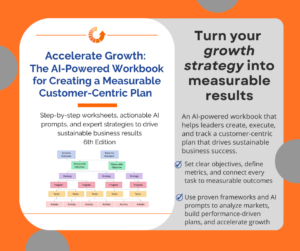
Buy Your Best-Practices Workbook
Your Marketing plan is your “recipe” for success. Increasing Marketing efficiencies and effectiveness needs to begin by ensuring the marketing initiatives are linked to business outcomes and that these initiatives are based on measurable objectives. This is why your Marketing plan is so critical to your Marketing Performance Management (MPM) process. It establishes at the outset the performance targets by which your effectiveness, value, and efficiency will be measured.
In addition to serving as directions, recipes facilitate consistency and repeatability. They help chefs know how much of each ingredient is needed in order to achieve the desired resul,t thereby preventing waste and improving both effectiveness and efficiency, including making good use of your time. Recipes also help ensure that the best possible quality “dishes” are confidently produced. Given these parameters, is your Marketing plan a good recipe?

Assemble a Marketing Plan That Receives C-Suite Accolades
Whether you’ve just started the planning cycle or are mid-way through the exercise, there are some proven practices for assembling a marketing plan that will earn high marks from the judges – the C-Suite. These three steps can help you develop strategies and tactical plans more tightly aligned with the business while building greater credibility with your executive team.
- Align EVERY Marketing objective with business outcomes. All Marketing objectives and strategies need to be aligned with business objectives. Creating a list of priorities and activities that are not linked to specific business outcomes diminishes your credibility. The credibility from showing ROI and contribution to business growth puts Marketing on equal footing with other departments, making it more of an investment than a discretionary expense. It is essential to craft clear, measurable objectives that at least meet these three criteria:
- linked directly to the organization’s business outcomes,
- incorporate a set of well-defined performance targets, and the metrics
- provide guidance on how success will be measured and reported
Use the best information available to map the impact of your Marketing on customer perceptions and behaviors completely through to financial outcomes. Not every marketing initiative directly drives incremental sales, so you may need to look beyond this outcome and consider other important business initiatives.
Objectives such as improving the customer experience, generating advocacy, maximizing key stakeholder relationships, optimizing joint development opportunities, and increasing awareness sound good, but how will we know if they’re achieved? This is why performance targets at the outset are so essential. Good recipes provide guidance on the quantity of each ingredient. The amount of each ingredient provides insight into the flavor profile. Armed with the specific amounts, you can make judgment calls for what to change if you decide to increase or decrease the number of servings.
2. Run payback scenarios. Before you even engage in developing and implementing a program, run payback scenarios to understand how changes to your target, marketing mix, offers, integration, and general investment levels change the profit potential. The more your payback analysis represents your expectations of marketing performance, the easier it will be to refine those assumptions and adjust your marketing decisions.
3. Select and use the right metrics. Your metrics should be aligned with the business outcomes and help the organization see the connection between marketing investments and initiatives and business results. Focus your metrics on outcome-based metrics, that is, metrics that help you know how you are performing against the business outcomes. The metrics aren’t your goals; they provide insight into how you are performing the goals.

Here are four other important questions to answer as you build your Marketing plan:
- Does it solve business problems such as acquiring, keeping, and growing the value of customers?
- Is it relevant and specific to your business?
- Will it produce a valuable outcome?
- Is it realistic? An ambitious plan is great as long as you have the necessary resources, but don’t set yourself up for failure.
Of course, having the right recipe is one thing, making the dish is another, and turning your recipes into a menu for a complete culinary experience is an even bigger undertaking. So as you craft your marketing recipe for success, here are some additional tips from some of the greatest chefs:
Choose strategies and programs that you know you can pull off. Your Marketing plan should outline the unique, meaningful strategies you are going to employ to achieve your objectives. Assuming that they are still relevant, go for “dishes” you’ve tried and cooked successfully in the past as these will have the highest chance of future success.
- Select a theme and create the right ambiance for your strategy, which, for our purposes, means context and content. Successfully implementing any meal that is intended to be consumed by guests rests on the quality of the food served and the care given to the atmosphere.
- Know your guests’ culinary tastes and requirements. One of the main conditions of a successful program is to make offers based on their preferences. This will allow you to meet their expectations.
- Demonstrate good timing. From preparation to delivery, as the saying goes, timing is everything.
Take a moment to stand back and evaluate your plan. Bon appetit!
FAQ:
A: Because many plans are activity lists with calendars and budgets—light on data, light on measurable objectives, and unclear on how Marketing links to business outcomes. Without targets and accountability, the plan reads as discretionary spend, not an investment.
A: The plan is the “recipe” that establishes, up front, the measurable objectives and performance targets by which Marketing’s effectiveness, value, and efficiency will be judged. Like a recipe, it enables consistency, repeatability, quality, and waste reduction.
A:
- Align every Marketing objective with business outcomes (with clear, measurable objectives, defined targets, and reporting guidance).
- Run payback scenarios to understand how changes in targets, mix, offers, integration, and investment affect profit potential.
- Select and use the right metrics—outcome-based metrics aligned to business outcomes that show the connection between investments and results.
A: Every objective should be directly linked to a business outcome, include performance targets and metrics, and specify how success will be measured and reported. Objectives that “sound good” (CX, advocacy, awareness, partnerships) still require quantified targets to be credible and manageable.
A: Targets are the “ingredient quantities.” They clarify what success looks like and enable course correction. Without them, you cannot evaluate whether to increase, decrease, or change the mix—and you cannot defend decisions with evidence.
A: To model profit implications before execution. Payback scenarios help you pressure-test assumptions and understand how performance expectations and investment levels change outcomes—making it easier to refine decisions and avoid preventable waste.
A: Metrics are not the goal; they are instruments that show performance against the goal. Select metrics that align to outcomes and demonstrate how Marketing investments translate into business results.
A:
- Does it solve business problems (acquire, keep, grow customer value)?
- Is it relevant and specific to the business?
- Will it produce a valuable outcome?
- Is it realistic given resources?
A: Choose strategies you can actually deliver (prefer proven “dishes”), create the right context and content (theme/ambiance), know customer preferences (offers that meet expectations), and demonstrate timing—from preparation through delivery.
Recent Posts
- Focus on Solving Customer Pain Points to Future-Proof Your Company | What’s Your Edge?
- Customer-Centricity in M&A: The Accelerant for Post-Deal Value
- How Strategic Clarity Drives Growth, Profitability, and Customer Value
- Breaking Through Stagnant Growth with a Customer-Centric, Process-Driven Approach | WYE?
- Why Lack of Accountability is Stalling Your Organization’s Growth


You must be logged in to post a comment.