
While customer loyalty in and of itself is valuable, the reason companies invest in customer loyalty is to achieve some type of business outcome. Many of the organizations we work with may measure customer satisfaction, customer loyalty, and even use the net promoter score. But what they haven’t done is define the business outcome they expect loyalty to impact.
For example, is the focus of customer loyalty to increase repurchase? Is it to drive referrals for similarly minded prospects (grow market share)? Is it to help expand your footprint within the customer base (expand share of wallet)? Facilitate faster adoption of new products (reduce time to revenue)?
Clarity around the needle you expect customer loyalty to move is essential. Movement of the business needle or outcome will affect whether the investment is paying off. Therefore, investing and implementing any customer loyalty initiative should be made in the context of what business needle or outcome you want to impact. Yes, it is possible that you may want a customer loyalty initiative to drive more than one outcome.

Ensure your customer loyalty efforts pay off with these five steps:
1. Define the business outcome(s). Before you implement a customer loyalty strategy and develop a customer loyalty program, understand the business outcome you are trying to impact. Possible outcomes might include expanding share of wallet, acquiring some number of net new customers, reducing customer churn by some amount or of a specific customer segment or tier, footprint expansion across business or regions within existing customers, and faster adoption of new products/solutions. This step lays the foundation for how you will measure the success of any customer loyalty efforts.
2. Take stock. Can you implement a loyalty strategy? A successful loyalty effort requires that you are at a minimum doing two things well: providing quality products and services that meet your customers’ expectations and being ultra-responsive to your customers in terms of problem resolution, meeting service requests, and so on. Some homework may be in order so you have a baseline for the state of customer loyalty today. Dig into customer comment cards and emails, service tickets, and leverage surveys and Voice of Customer (VoC). Create a culture that encourages customers to let their voice be heard. Actively solicit information from your customers to identify problems and opportunities and consider implementing an ongoing VoC initiative. Keep your surveys short, bias-free, and well-structured. Use random sampling to gather feedback continuously without over-surveying, and create summary survey indices that can be displayed graphically and tracked over time.
3. Be strategically tactical. Define the strategy and program within the context of the business outcome. Repurchase of existing products vs. acquisition of net new customers are two different outcomes and as such will mostly likely entail different strategies and programs.
4. Measure. Research suggests that changes in customer loyalty generally precede changes in business outcomes, typically by a quarter. Create metrics to measure and improve loyalty and the desired business outcome. Track the results over time so you will be able to employ statistical techniques to discover what aspect of your loyalty efforts are having the greatest impact. Technology can also help you centralize the information, create reports, and structure drill-downs
5. Optimize. Use the results of your research and measurement efforts to make course adjustments that will move the needle, not just improve loyalty. You may need to make strategy and program adjustments in order to realize your specific business outcome. You may also need to invest in systems, processes, and tools to improve service quality, address gaps, and enhance your loyalty efforts.
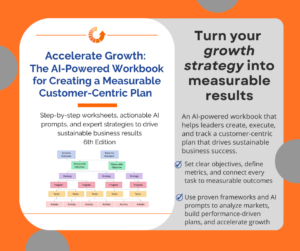
Buy Your Best-Practices Workbook
Researchers have clearly documented the impact of customer loyalty on profitability (derived by higher and faster conversion of referrals, faster time to revenue for new products, etc.). Creating a loyalty program is a significant commitment of energy, time, and financial investment. The saying “do no harm” aptly applies to customer loyalty programs, so seek advice if this is your first attempt at the initiative.
FAQ:
A: Loyalty is valuable, but companies invest in it to drive specific business outcomes—not loyalty for its own sake.
A: They measure satisfaction, loyalty, and NPS but fail to define the business outcome loyalty is expected to impact—so success can’t be evaluated.
A: Repurchase, referrals (market share growth), share-of-wallet expansion, footprint expansion within accounts/regions, churn reduction, and faster adoption of new products (reduced time-to-revenue).
A: The intended outcome determines the strategy, program design, and measurement approach—and whether the investment is paying off.
A: Define outcomes, take stock (baseline readiness), be strategically tactical (design to outcome), measure (loyalty + outcome), and optimize (course-correct to move the business needle).
A: Confirm you deliver quality products/services and are highly responsive in service. Establish a baseline using comment cards/emails, service tickets, surveys, and Voice of Customer (VoC).
A: Track loyalty metrics and the targeted business outcome. Loyalty changes often precede outcome changes (commonly by about a quarter), enabling analysis of what’s driving impact.
A: Use measurement insights to adjust strategy/programs (and sometimes systems/processes/tools) to improve service quality, close gaps, and drive the defined business outcome—not just raise loyalty scores.
Recent Posts
- Focus on Solving Customer Pain Points to Future-Proof Your Company | What’s Your Edge?
- Customer-Centricity in M&A: The Accelerant for Post-Deal Value
- How Strategic Clarity Drives Growth, Profitability, and Customer Value
- Breaking Through Stagnant Growth with a Customer-Centric, Process-Driven Approach | WYE?
- Why Lack of Accountability is Stalling Your Organization’s Growth


You must be logged in to post a comment.