
 Picture this: It’s the end of your annual strategy session. The whiteboards are full, the team is motivated, and plans are in hand. Yet months later, despite diligent effort, results are ambiguous. Progress feels more like movement than momentum—often slipping into random acts of strategy that waste resources and stall strategic execution.
We’ve heard this story many times over the past few decades. It’s not for lack of vision or effort. The real culprit? Your plans sound promising, but lack the discipline of measurement.
This isn’t just anecdotal. According to Harvard Business Review, only 29% of organizations say they successfully execute on their strategic plans. The majority falter not because their strategies are flawed but because their plans are non-measurable—devoid of clear outcomes, actionable business performance metrics, and accountability.
In this article, we’ll explore:
- Gaining Monumental Results by Ditching Non-Measurable Plans
- Transforming Intention Into Sure-Fire Impact: You Need Purpose + Metrics
- Reducing The High Cost and Risk of Executing Non-Measurable Plans
- 4 Stunning Ways Non-Measurable Plans Derail Strategic Performance
- Bringing Measurement to Life: Customer-Centric Growth Planning Steps
- Overcoming Barriers to Strategy Measurement
- Replacing Random Acts with Outcome-Driven Actions
Transform Intention Into Sure Fire Impact: You Need Purpose + Metrics
 Every successful plan begins by answering “why.” Purpose is the spark that ignites action and aligns teams. In Your Marketing Plan Starts with Why, we are adamant that a clear “why” is essential for direction. But purpose alone is not enough. Without measurement, purpose drifts into aspiration, and execution becomes guesswork.
Metrics serve as the bridge from aspiration to achievement. By building measurement into your plan, you transform intention into impact. Measurable plans provide both a roadmap for progress and a mechanism for accountability.
Revealing The High Cost and Risk of Executing Non-Measurable Plans
Non-measurable plans are seductive because they offer comfort—the illusion of progress without the discomfort of scrutiny. But this comfort is costly. When organizations forgo measurement, they trade clarity for ambiguity, and resilience for risk. Without metrics, strategy execution often defaults into random acts of activity: busy teams, scattered initiatives, and wasted resources.
De-risk Your Strategic Planning Execution explores how measurement acts as an insurance policy for your strategy. Measurable performance targets enable you to detect early warning signs or adapt when reality diverges from expectations. This ensures resources aren’t wasted, opportunities aren’t missed, and teams aren’t disengaged.
Without measurable milestones, it’s nearly impossible to detect early warning signs or adapt when reality diverges from expectations.
The result? You’ll find resources are wasted, opportunities are missed, and teams become disengaged. Organizations with measurable plans are better equipped to link activities to outcomes, demonstrate value, and drive profitable growth. Measurable plans help an organization achieve the bottom line.
Buy Your Best-Practices Workbook
4 Stunning Ways Non-Measurable Plans Derail Strategic Performance
Even the most well-intentioned plans can go awry when measurement is missing. Organizations often drift into strategic planning pitfalls when clear metrics and accountability are absent. Here are four of the most common ways non-measurable plans quietly undermine performance and growth:
- Accountability Gaps: When objectives aren’t measurable, no one truly owns the outcome. Ambiguity breeds confusion and diffuses responsibility. Accountability is only possible when performance is visible and metrics are clear.
- Missed Growth Opportunities: Growth requires more than good intentions. It demands clarity about what success looks like and how it will be tracked. Measurable plans enable your organization to seize opportunities with confidence, prioritize resources, and respond agilely to change.
- Financial Impact: Without measurable plans, it’s impossible to connect investments to outcomes. Leadership is left guessing about what’s working and what isn’t. This undermines confidence and ultimately, performance. Every plan should demonstrate the direct link between measurement and financial results.
- Inability to Adapt: Scenario planning—asking “what if?”—is only possible when metrics are in place to evaluate alternatives and pivot as needed. Measurement enables data-driven decision-making, risk management, and real-time adaptability.
Bringing Measurement to Life: Practical Steps for B2B Leaders
We believe measurement is more than a tool; it’s the backbone of alignment, accountability, and customer-centricity. Plans anchored in customer outcomes outperform those that are internally focused or driven by activity.
Our outcome-based mapping process helps leaders by linking activities to outcomes, ensuring progress is both visible and meaningful. This approach transforms results and culture. Teams gain clarity, focus, and the ability to course-correct in real time.
Translating the need for measurable plans into daily practice doesn’t require a radical overhaul—it requires intention and discipline. Here’s how to get started:
- Clarify Customer-Centric Outcomes: Ground your plan in outcomes focused on customer acquisition, retention, and growth. This aligns your team’s energy and provides a powerful filter for every initiative and investment. For more, see Customer-Centric Strategy Facilitates Growth Planning.
- Select the Right Metrics: Choose metrics that reflect progress, not just activity. The right metrics illuminate cause and effect, revealing which actions are genuinely moving the needle. Easy Ways to Start With the Right Metrics offers guidance on how to select meaningful measures.
- Build Logic Chains and Outcome-Based Maps: Visualize how tactics connect to outcomes. This makes it easier to prioritize, allocate resources, and communicate progress. Our Accelance® SaaS application is designed for this purpose.
- Incorporate Scenario Planning: Ask “what if?” and model the implications of various choices. Measurement makes scenario analysis actionable and risk management practical. Learn more in Using What-If Strategy Planning.
- Establish Accountability Structures and Review Cadence: Make measurements visible and regular. Set up recurring reviews, celebrate progress, and adjust course as needed.
- Keep the Plan Center Stage: Once you have buy-in, initiate a formal process to keep the team engaged and focused. Regular meetings between executives and unit managers should foster collaboration, dialogue, and problem-solving. For more, see De-risk Your Strategic Planning Execution.
- Treat the Plan as a Living Document: Regularly revisit your metrics, review results, and be willing to adjust course. This agility is what separates organizations that thrive from those that merely survive. As John C. Maxwell said, “Be stubborn about the vision but flexible with your plan.”
How to Overcome Barriers to Strategy Measurement
Even the most well-designed measurable plan can encounter resistance. Change is uncomfortable, and measurement introduces transparency; some may initially resist. The key is to build buy-in early—invite input, pilot new approaches, and celebrate small wins.

Capability gaps are also common. Data silos, missing tools, or skill shortages can slow progress. The good news? These are solvable challenges. Often, the discipline of measurement matters more than the sophistication of the tool.
Our customers often find that these three actions can move the measurement conversation forward:
- Audit Your Current Plan: Review your existing strategic or operational plan. Are the outcomes specific and measurable? Are the metrics clear? If not, identify gaps and reframe objectives to be outcome-based.
- Engage Your Team: Host a working session to align on why measurement matters and how it supports both customer and business objectives. Use Your Marketing Plan Starts with Why as a pre-read.
- Map Activities to Outcomes: Use outcome-based mapping to connect every major initiative to a measurable result. Consider using a tool like Accelance®.
Reclaim Growth: Replace Random Acts of Strategy with Outcome-Driven Actions
If you’ve ever felt the frustration of stalled initiatives or unclear results, you’re not alone. The difference between organizations that realize their ambitions and those that fall short is rarely vision—it’s the discipline of measurement.
When you commit to measurable, customer-centric planning, you replace random acts of strategy with deliberate, outcome-driven actions that create a path to better accountability, sustainable growth, and resilience.
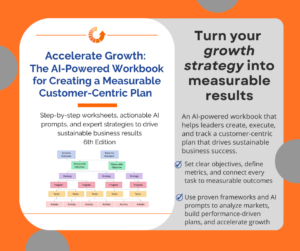
Ready to operationalize these principles? Our Measurable Customer-Centric Growth Plan Workbook is your step-by-step guide from purpose to performance. It’s a catalyst for change.
As I remind my clients: “Measurement is the language of progress. Make it yours.”
FAQs
(created with the help of Penn at Sintra.ai)
- What is a measurable plan?
A measurable plan clearly defines outcomes, metrics, and accountability structures so progress can be tracked and adjusted in real time. - Why do strategic plans fail without measurement?
Without clear metrics, organizations can’t link activities to outcomes. This leads to wasted resources, disengaged teams, and random acts of execution. - How do I make a strategic plan measurable?
Start by clarifying outcomes, choosing meaningful metrics, mapping activities to results, and establishing accountability cadences. - What are random acts of strategy, and how do they affect growth?
Random acts are activities pursued without clear linkage to outcomes. They create busyness but rarely drive performance. Measurement eliminates them. - How does measurement improve business resilience?
Metrics provide early signals that allow leaders to pivot when assumptions prove wrong or when conditions change. - What business performance metrics matter most in growth planning?
The most useful metrics link directly to customer acquisition, retention, and profitability—connecting strategy to measurable outcomes.
Recent Posts
- From Hindsight to Foresight: Closing the Growth Measurement Gap
- Focus on Solving Customer Pain Points to Future-Proof Your Company | What’s Your Edge?
- The Destiny of Siloed Priorities is Random Acts
- The Power of Customer-Led Product Development for Market Growth | What’s Your Edge?
- Footprint Expansion: A Customer-Centric Growth Strategy for Scaling


Leave a Reply
You must be logged in to post a comment.